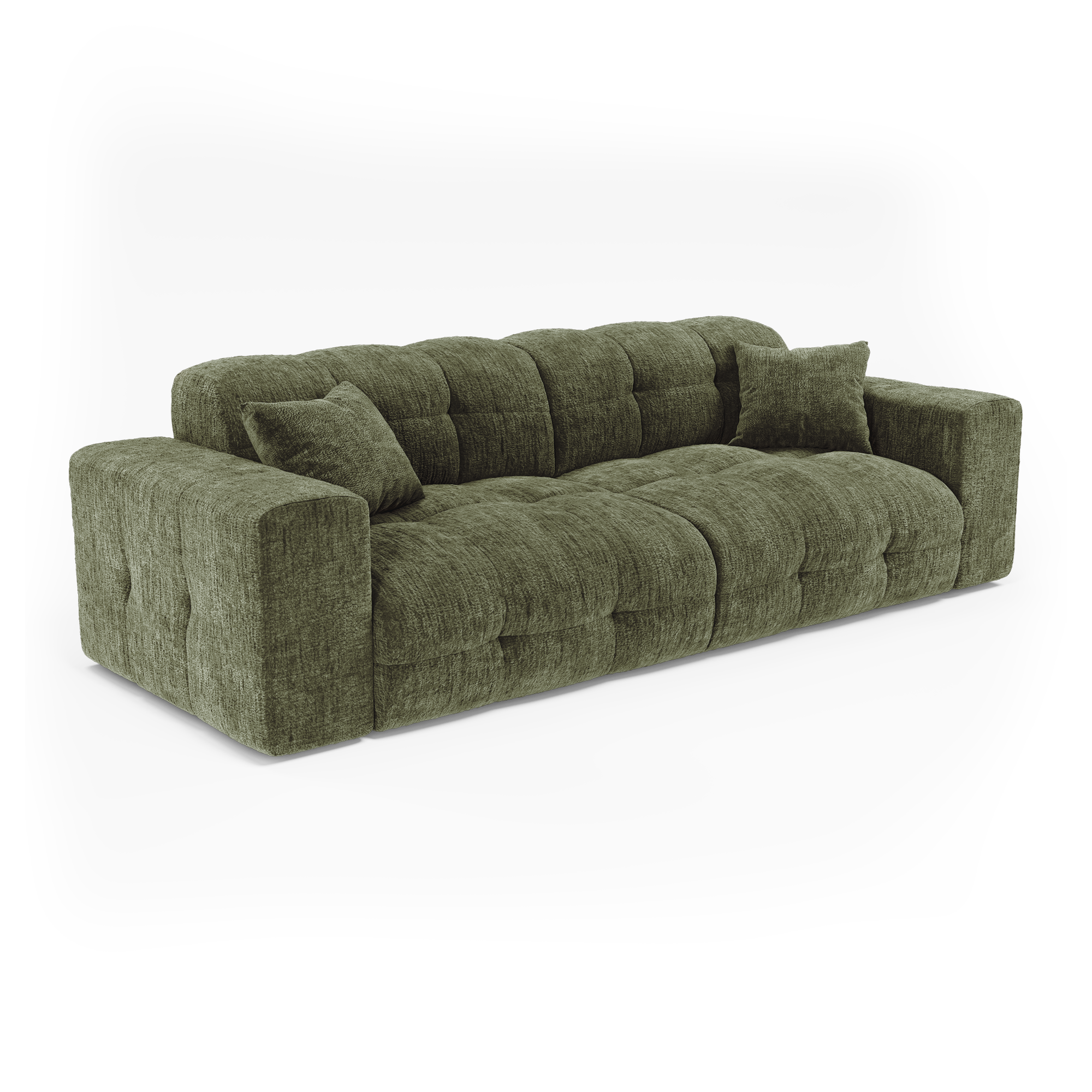


Color trends for high-end decor
The year 2025 marks a return to the very essence of refinement. Far from decorative exuberance, contemporary elegance is now expressed through measured palettes, enveloping hues, and subtle harmonies. In this spirit, color regains its fundamental role: to reveal space with precision, to highlight the nobility of materials, and to create soothing and unique atmospheres. The dominant, understated and organic base to structure the space To create a high-end atmosphere, the choice of dominant colors leans towards warm neutrals and earthy tones, true pillars of a timeless decoration. Mocha mousse, the new sophisticated neutrality Named Pantone's Color of the Year, Mocha Moss stands out as a soft and enveloping alternative to classic brown . This shade infuses rooms with subtle warmth while harmonizing beautifully with muted shades of sage green, grayish blue, or dusty rose. Applied to a solid wall, it enhances living or relaxation spaces with understated elegance. Beige, sand, cream for a soft and permanent light Light neutrals retain their timeless status. Beige, sand, or cream structure the space without ever weighing it down. These shades provide an ideal backdrop to reveal the richness of raw materials—solid wood, veined marble, full-grain leather—while bringing a sense of serenity and visual continuity. The artisanal soul of terracotta and caramel To lend the space a warmer feel , earthy tones , inspired by natural pigments, are subtly introduced. Matte terracotta, rich caramel, and cinnamon brown evoke the material in its most authentic form. These shades find their place on a wall, in the upholstery of a velvet sofa , or on a ceramic object. Deep accent colors to assert character Once the chromatic base is established, the palette is enriched with bolder touches. Accent colors play a role of controlled contrast , giving the decor its personality while maintaining a certain restraint. Organic green, between grounding and calming Deep greens —olive, sage, moss—are essential. Closely linked to nature, they create a subtle connection between indoors and outdoors . Whether used as an accent wall or in the choice of a velvet armchair , they harmonize perfectly with metallic finishes (chrome, brushed brass). Combined with light or dark woods, they create serene, balanced, and decidedly contemporary atmospheres. A muted horizon with blue From pastel blue to midnight blue, blue remains a safe bet for creating balanced spaces . In a bedroom, sky blue promotes calm and relaxation. Used in a library or formal room, midnight blue introduces a structuring visual density. Combined with warm metals or noble materials, it suggests stability and timelessness. The structuring contrast of dark hues In a bolder vein, dark tones offer valuable visual anchoring . Slate gray, subtle and rich, is perfect for a basement or workshop. Conversely, charcoal black, used on furniture legs, pendant lights, or frames, defines the structure of the space without ever darkening it. These kinds of shades demand impeccable finishes and precise application to maintain the overall light balance. Bright touches to awaken harmony To liven up the palette without breaking its harmony, certain bright shades appear in small touches, often occasional but always meaningful. The measured bursts of mustard yellow Deep yet luminous, mustard yellow should be handled with care. A graphic cushion , a piece of art, or a ceramic can be enough to enliven a neutral setting. They bring brightness and vibrancy while maintaining a certain sophistication, especially when combined with cream or taupe backgrounds. The soft pigmentation of the orange hues Drawn from nature and light, coral, apricot, or amber orange soften even the most understated compositions . They find their place on textile accessories, a throw, a table lamp, or a small lacquered piece of furniture. Their effect is all the more striking when used sparingly, like a chromatic breath in a muted setting. The consistency between materials, finishes and monochrome While color structures visual perception, it is the material that reveals its depth. In 2025, refinement will be achieved through perfect harmony between hues, textures, and finishes . Natural materials and matte finishes The choice of materials remains paramount. Fine wood, travertine, raw stone, and full-grain leather lend a tactile authenticity that transcends mere decoration. As for the finishes, they are matte or subtly satin. They discreetly absorb light and enhance the feeling of understated luxury. Discreet metals for refined details Aged brass, polished chrome, or patinated bronze act as elegant punctuation marks . Applied to light fixtures, handles, or furniture frames, they capture the light without ever dazzling it. Subtly placed, these metallic details infuse a controlled modernity into interiors rooted in the tradition of beauty. The audacity of monochrome Sometimes, the ultimate in sophistication lies in the rejection of contrast. An interior designed in a single color scheme—beige, brown, green—creates a remarkable impression of unity and fluidity. But when monochrome is combined with plays on textures and volumes, it generates an enveloping and almost architectural effect . Towards a balanced palette for a high-end interior By 2025, color will be part of a holistic approach to space. Each hue will be chosen for its ability to interact with materials, structure light, and enhance the character of the space. A carefully curated palette will thus become the most fitting expression of a high-end interior: understated, timeless, and unique.
Learn more
The subtle balance of the contemporary sofa
At the heart of the living space, the sofa is no longer limited to its function as a seat. It has become the central piece, the anchor point around which the aesthetics and conviviality of an interior revolve. The contemporary sofa, in particular, stands out as a discreet yet assertive style statement: clean lines, controlled comfort, and understated elegance. Stripped of the ornamental excesses of the past, it offers a vision of design based on essentials. Form follows function, and every detail finds its precise place. A contemporary style with well-defined codes Contemporary design is defined by its ability to capture the spirit of the times. The resulting sofa reflects this philosophy: it is characterized by radical simplicity . The lines are clean, crisp, and precise, free from any unnecessary embellishment. This structural restraint highlights the quality of the materials and the balance of proportions. The forms navigate between geometric rigor and organic fluidity . Some creations adopt a rectilinear, almost architectural structure, while others draw inspiration from natural curves to offer more fluid and sculptural silhouettes. These forms create a feeling of softness and a sensation of total comfort. The richness of the materials also reflects this quest for balance . Leather and fabric remain timeless choices, selected for their elegance and durability. As for velvet, its shimmering sheen and tactile quality add a touch of timeless sophistication. Furthermore, the rise of environmental awareness encourages a preference for responsible materials, in a desire to reconcile aesthetics and sustainability. The color palette of the contemporary sofa oscillates between understated elegance and bold statement pieces . It can adopt neutral and soothing hues—grey, beige, cream, taupe—to blend harmoniously into any interior. Conversely, it can become a striking and assertive piece, adorned with vibrant and deep colors—midnight blue, emerald green, terracotta, mustard yellow. A signature detail of the contemporary sofa lies in its base . Often slender and discreet, made of metal or wood, the legs give an impression of lightness , accentuating its modernity. New expressions of comfort in 2025 The contemporary sofa is asserting itself more than ever as the epicenter of the living room, meeting new expectations in terms of comfort and flexibility. Sculptural and organic forms take center stage. Volumes become generous, seats deep, curves enveloping. With an "XXL cocooning" effect, comfort is absolute. Modularity is proving essential. The sofa is no longer a fixed piece of furniture, but becomes a flexible, evolving system capable of adapting to different lifestyles. Independent modules can be combined and reconfigured to create personalized spaces, according to desires and uses. This desire for total comfort is accompanied by a trend that could be described as “ XXL minimalism .” The shapes retain their clean lines, but the dimensions are enlarged. Low, deep seats encourage a more relaxed posture, blurring the lines between the formal living room and the relaxation space. At the same time, eco-responsibility is becoming essential. Materials are recycled, wood comes from sustainably managed forests, foams are no longer harmful, and manufacturing processes are redefined to limit the carbon footprint. Contemporary design thus becomes a vehicle for meaning and values. The key advantages of the contemporary sofa The success of the contemporary sofa lies in a masterful balance between aesthetics and functionality . Its advantages make it a piece that is both desirable and relevant, meeting the most demanding expectations of modern living. Beyond its appearance, the contemporary sofa possesses remarkable versatility . Its clean lines and timeless design allow it to blend seamlessly into a variety of environments—from classic and minimalist to even industrial styles. It doesn't impose a single style but rather elevates it, enhancing the character of each space. The elegance of the contemporary sofa is never separate from its function. Every element of its design is conceived to meet modern needs. Comfort is paramount, ensured by generous seating and high-quality materials. Its versatility is demonstrated through modular systems, adapting to changing spaces, or convertible models for sleeping functionality. The strength of contemporary design also lies in its adaptability . A vast palette of materials—leather, velvet, and more—is combined with an extensive range of colors. This diversity, coupled with a wide choice of dimensions, creates a piece that is almost bespoke, integrating seamlessly and reflecting the unique character of the interior. The difference between contemporary and modern It is common to confuse the terms “modern” and “contemporary”, yet they refer to two distinct realities . Modern style is linked to a specific historical movement of the 20th century , embodied in particular by the Bauhaus movement or Scandinavian design. It is based on formalized principles, rooted in a bygone era. As for contemporary style , it is by definition “ what is being done now ”. It reflects the present time, is constantly evolving, draws on multiple influences – including modernism – while integrating technical innovations and current sensibilities. Where modernity is a fixed point of reference, contemporary remains open, alive and adaptable . The essentials of a modern interior The success of the contemporary sofa isn't solely based on its aesthetics. Designed for comfort, it's built to last , thanks to timeless lines, high-quality materials, and meticulous craftsmanship. Some models incorporate adaptable features—such as sleeping and storage—while maintaining a clean, minimalist design. It ages gracefully, never going out of style, adapting equally well to classic and unconventional interiors. Its aesthetic and material longevity makes it a thoughtful choice, both decorative and functional, capable of keeping pace with evolving living spaces without compromising its identity. In short, the contemporary sofa transcends its status as a mere object. It blends modern comfort, essential design, and subtle luxury, with a focus on quality, functionality, and the environment. A central element of the home, it becomes a hallmark of today's lifestyle.
Learn more
How to protect your sofa in summer?
Summer has arrived in our homes, bringing with it bright light, warm temperatures, and a cozy atmosphere. The living room becomes a soothing haven, filled with leisurely afternoons and extended gatherings. The sofa naturally finds its place, both functional and symbolic. But in this radiant season, it is more exposed to increased use and daily wear and tear: heat, UV rays, humidity, and stains. All these factors, over time, damage its materials, dull its colors, and compromise its longevity. Through a series of actions and choices, it becomes possible to protect it without losing its elegance. Protect the sofa from light and intense heat. Exposure to light is the first challenge. While sunlight enhances the shape and reveals the texture of materials, it can also be detrimental to a sofa . Its rays accelerate fabric fading, dry out leather, and prematurely wear out the fibers. For this reason, the sofa 's placement plays a crucial role. Positioned near a south-facing window or under a bright light source, it is exposed to constant light intensity. A simple adjustment of the layout can often limit this direct exposure while preserving the room's natural brightness. When space is limited, light filtering becomes essential. Sheer curtains create a soft, intimate atmosphere while diffusing light into a gentle, enveloping glow. More efficient blinds offer protection against excessive heat, helping to maintain a comfortable temperature without compromising the overall aesthetic. During the hottest hours of the day, a simple gesture is all it takes to preserve the integrity of the upholstery. A cotton sheet or a linen throw creates an almost imperceptible protective barrier. In particularly exposed environments—verandas, south-facing living rooms—using a UV-resistant cover becomes essential, fitting the sofa 's contours perfectly. This textile cover then forms a second skin, both preventative and aesthetically pleasing. Anticipate summer stains and ambient humidity The summer season brings many opportunities for intensive use. Cool drinks, casual meals, and convivial moments readily take place in the living room. However, these pleasures can leave lasting marks on textiles and leather. A water-repellent textile treatment applied at the start of the season acts as a first line of defense. It forms an invisible film that prevents liquids from penetrating the fibers. The protected surface allows for immediate cleaning and prevents the appearance of deep stains. Afterward, maintenance becomes simpler and more effective: wiping with a soft, dry cloth removes all kinds of residue. These steps help maintain the vibrancy of the fabric, preventing colors from fading and the fibers from becoming soiled. Additional textiles play a complementary role here. A lightweight, easy-to-wash throw , placed over high-traffic areas, becomes an attractive barrier, absorbing everyday mishaps. Machine washable, it regains its freshness in a few hours, ready to extend the season with complete peace of mind. Often overlooked, ambient humidity is an insidious factor in deterioration. To preserve the immediate environment of the sofa , natural ventilation is essential every day. Opening windows wide during the cooler hours promotes air renewal and prevents stagnation. In particularly humid regions, a dehumidifier can stabilize the atmosphere and prevent the appearance of mold or unpleasant odors. Adapt the protection to the nature of the coating Each material expresses its own sensitivity which requires specific care. Breathable fabrics – linen, cotton – promote freshness and lightness. In summer, their suppleness allows for the use of washable covers, easy to replace without altering the overall feel of the space. Thick textures – such as velvet – retain more heat and require increased vigilance, especially in the case of prolonged exposure. A living and precious material, leather requires special care. Applying a specific lotion two or three times a season, ideally enriched with a UV filter, preserves its suppleness and prevents cracking. For routine cleaning, a soft, barely damp cloth is all that's needed to maintain its natural patina without damaging it. Synthetic coatings are more resistant to repeated use but remain sensitive to certain chemicals. Using mild, non-abrasive cleaners ensures increased longevity without the risk of fading or deformation. Consider temporary outdoor use The desire to extend the comfort of the living room beyond the interior walls may arise during the summer months. A sofa placed on a shaded terrace, in a veranda, or a loggia provides the perfect setting for a leisurely lunch or a moment of quiet relaxation. However, this outing remains occasional and must be strictly governed by essential precautions . Even when outdoors in a sheltered location, double textile protection is essential: a thick sheet or a waterproof cover effectively isolates the upholstery from the elements. Pollen, dust, UV rays, and nighttime humidity all represent invisible threats. Bringing the sofa indoors at the end of the day is imperative. Prolonged exposure that could damage the materials must be avoided. Create a gentle summer atmosphere Protecting a sofa is inextricably linked to a broader reflection on the interior atmosphere. In summer, the aesthetic becomes more airy, textures lighter, and materials evoke a sense of freshness. Cushions are adorned with cotton covers , throws adopt lightweight weaves, and the color palette softens—beige, cream, sage green. These elements serve more than just a practical function; they become the vehicles for a coherent, seasonal visual language. Textile mists made with light, natural fragrances diffuse a feeling of cleanliness and serenity. Subtle notes of white tea or orange blossom envelop the seat between uses, without ever saturating the fabric. Sprayed from a distance, they discreetly and perfectly capture the essence of summer. Protection as an extension of style Protecting your sofa in summer means preserving its stylish look without ever compromising its essence. A few simple steps are all it takes to maintain the fabric, color, and comfort, creating a seamless blend of care and aesthetics.
Learn more
Armchair or pouf: a matter of style and elegance
Designing a living room is more than just arranging furniture. It's a carefully considered composition, where each piece must interact with the space, the light, and its intended use. At the heart of this composition lies a crucial question: should you opt for the timeless elegance of an armchair or the discreet versatility of a pouf ? Whether a statement piece or a supplementary solution, a structural seat or a mobile occasional table, each type has its advantages—and limitations. A careful examination of their specific characteristics will guide your decision to one that is coherent, elegant, and long-lasting. The armchair: a symbol of comfort and elegance A true signature element in the living room landscape, the armchair embodies the architectural dimension of comfort . Its silhouette commands attention, establishes a rhythm in the room, and offers a deliberate pause. Far from being merely a seat, it becomes a landmark, an anchor in the space. Its main advantage lies in the comfort it provides. With its ergonomic backrest and enveloping armrests, the chair is designed for long periods of tranquility. The most advanced models even add features designed for well-being: reclining, footrest, etc. From an aesthetic standpoint, the variety of materials and lines allows for all kinds of expression: taut lines or enveloping curves, deep velvet or woven fabric. Each armchair can thus become an exceptional piece, interacting with the other decorative elements in the living room. It immediately conveys an impression of stability, grounding, and character. This sophisticated seating, however, has its requirements . The size of an armchair is significant, and integrating it into smaller rooms can be tricky. Its presence can overwhelm the overall composition, reduce the perception of space, and disrupt the general balance if it's poorly chosen. Therefore, a fairly large space is necessary to accommodate the armchair . The pouf: flexibility and conviviality personified In contrast, the pouf boasts a flexible and spontaneous aesthetic . It doesn't seek to impose itself but rather to complement and suggest, more than to assert. Lightweight, mobile, and multifunctional, it embodies a contemporary logic of adaptability, where each piece can evolve according to its uses. Its primary function is, of course, that of a discreet and precious seat , instantly ready to be used. But the pouf also knows how to reinvent itself, multiplying its uses without ever cluttering the space. It is the quintessential extra seat, the one you move to welcome an unexpected guest and include them in the conversation. It becomes a sturdy footrest, extending the comfort of the sofa after a long day. Adorned with an elegant tray, it transforms into a substitute coffee table, ready to hold a glass or a book. In minimalist interiors, studios, or small living rooms, the pouf is a preferred choice due to its minimal visual impact and ease of integration . Available in a variety of sizes and textures, it complements all styles without ever imposing its presence. It is important to note, however, that its comfort remains limited . A pouf is generally not designed for prolonged sitting. Lacking a backrest, it offers no support and can quickly become uncomfortable, relegating it to short-term use. Its visual impact should also not be underestimated. While a well-chosen pouf is often an asset, an unsuitable size or an accumulation of poufs creates an impression of visual clutter or disarray. It must therefore be chosen carefully, in harmony with the rest of the furniture. Guiding your choice The decision between an armchair and a pouf isn't solely based on technical criteria. It depends on your vision for your living space. Are you looking to structure or declutter? To create a calm atmosphere or suggest conviviality? To offer a comfortable personal retreat or to accommodate the unexpected with flexibility? Analyzing your own needs and overall lifestyle guides and facilitates the decision-making process. This armchair is designed for those who want a stable and generously sized main seat , capable of becoming a centerpiece in the living room. It makes a confident statement about inhabiting the space. On the contrary, the pouf appeals to those who live in a more confined space or who like to entertain . It slips in and adapts to the interior with ease, and simply meets the demands of daily life. If choosing between the two is difficult, the solution lies in combining them . There's no need to pit them against each other, as they complement each other perfectly. Pairing an armchair with a pouf enriches the living room's design. The armchair serves as a focal point around which one or two poufs can be placed, ready to be used at any time. This configuration allows you to enjoy the best of both worlds: the structured comfort of the armchair for moments of tranquility, and the adaptable functionality of the poufs for when you need a change of scenery. Together they form a balanced duo where elegance is combined with practicality, and comfort with modularity. A living room designed with nuance More than just a simple choice between two pieces of furniture, the reflection on the armchair and the pouf questions our way of inhabiting our spaces: the importance given to posture, movement, fluidity or permanence. The armchair offers a structured, enveloping, and stable solution. The pouf , on the other hand, provides a light, adaptable, and spontaneous one. Each has its own distinct character, and it is in the ability to combine these two specificities—form and function—that balance is achieved. The armchair and the pouf are not opposed: they complement each other. Provided they are chosen carefully – timeless lines, noble materials, correct proportions – they can become the perfect partners in a welcoming and profoundly elegant interior.
Learn more
The beige sofa: the must-have item for summer 2025
When warmer weather arrives, the desire for light, airiness, and renewal extends into our homes. Furniture becomes more ethereal, colors soften, and the atmosphere focuses on what truly matters. Among the pieces that perfectly embody this transition to summer, the beige sofa stands out as an obvious choice. Subtle, luminous, and surprisingly versatile, it aligns with the season's trends and becomes the answer to our need for serenity, harmony, and lasting beauty. A shade that enhances the light Before being a color, beige is a light-reflecting agent . In the color spectrum, it occupies a unique place: that of a revealer. It doesn't simply reflect light, but captures it, modulates it, and diffuses it with unparalleled softness. Therein lies its primary nobility. In a summer interior, bathed in generous sunlight, the beige sofa becomes the instrument of a sensitive architecture . It neither absorbs nor dazzles, but rather reflects. It establishes a diaphanous atmosphere, visually enlarging the space and offering the eye a fluid and serene flow. It acts as a discreet visual anchor point, around which other elements can express themselves. This luminous presence lends the beige sofa an almost structural dimension . It redefines the balance of a space and helps create an atmosphere where one can breathe, where one slows down. It's an aesthetic of calm, of controlled detail and controlled light. The tactile dimension While nuance is essential, the modernity of the beige sofa in 2025 lies primarily in its texture . Elegance is now measured less by lines than by feel. It's a luxury that can be touched and experienced every day. The season's key materials are an ode to the senses. With its generous loops, the bouclé fabric sculpts the seat like a tactile cocoon. Its texture animates the surface with subtle plays of light and shadow, giving the sofa unprecedented visual depth. As for velvet , it sheds all nostalgia. In a ribbed or textured version, it plays with light, introducing an enveloping softness that suggests a certain preciousness. Each fabric becomes a language. Through its chromatic simplicity, the beige sofa fully showcases the richness of these materials. It is a sensory haven, a place of respite whose sophistication is revealed to the touch. A sofa at the heart of all compositions The strength of the beige sofa also lies in its ability to create a dialogue . It is not a solitary statement but a silent pivot around which an entire decorative composition is structured. It allows for all kinds of bold choices and harmonies. Combined with raw and organic materials - solid wood, rattan, handcrafted ceramics - the beige sofa creates a scene of serenity, evoking summer houses with clean lines. Juxtaposed with more contemporary lines —black steel, smoked glass, raw concrete—this piece of furniture also reveals its architectural dimension. It softens the rigor of minimalism, introducing warmth without disrupting the purity of the volumes. It then becomes the human counterpoint to modernity, a place of equilibrium between controlled coolness and undeniable comfort. A chromatic foundation for summer One of the most persistent misconceptions about beige is that it's supposedly bland. However, it's precisely the opposite. This color acts as a backdrop, meaning it welcomes, reveals, and enhances other hues. It never dulls the atmosphere but, on the contrary, magnifies it . Thus, bold colors —sage green, terracotta, midnight blue, or mustard—find an ideal setting in beige. They gain intensity without ever becoming excessive. Lemon-toned cushions , ochre linen throws, eclectic rugs, or abstract paintings can express themselves freely against this soft and balanced backdrop. The beige sofa doesn't impose itself but enhances the surrounding décor. It is this ability to orchestrate nuances that makes it so indispensable. It allows for the creation of coherent universes , while leaving the door open for stylistic experimentation. A timeless and lasting choice Beyond its aesthetic appeal, the beige sofa embodies a thoughtful choice , based on timelessness. Where other shades can become tiresome, this color evolves, transcending seasons without losing its freshness. It adapts to the transformations of an interior, accompanies the evolution of a lifestyle without ever becoming outdated. This sophisticated neutrality makes it a foundational piece. It is the anchor point around which the space is rebuilt, evolving with time and desires. It transcends styles and trends, never becoming static. This is what makes it truly indispensable: because it combines aesthetics, adaptability, and durability. At Premium Interiors, this approach resonates perfectly. Each of our beige sofa models is designed as a statement piece, combining balanced lines, noble materials, and a subtly crafted palette. Here, beige isn't an option but a given: the color of a serene, luminous interior, imbued with a calm and essential elegance. Beige, a contemporary obvious choice The beige sofa perfectly encapsulates the aesthetic aspirations of summer 2025. It embodies light without being overpowering, comfort without heaviness, and luxury without excess. It's a piece that structures the space, soothes the eye, and enhances the overall look. It doesn't seek to dominate, but rather to reveal. It offers a perfect response to contemporary demands: simplicity, quality, and durability. Through it, a lifestyle emerges: the essential becomes sublime, and every detail tells a story of masterful balance. Its elegance and ability to create unity make it indispensable for this summer—and for many seasons to come.
Learn more
Our signature sofas for a modern style
The sofa, the starting point of an atmosphere Every interior design project begins with a vision: that of a space that is harmonious, functional, and in tune with the times. In this quest for balance, the choice of furniture plays a crucial role. Among all the pieces that make up an interior, the sofa stands out as an anchor point, structuring both the volumes and the uses of the space. We design our collections as precise responses to contemporary demands: clean lines, durable materials, and controlled comfort. Some of them stand out for their ability to combine aesthetics and adaptability, character and timelessness. These are the models we have brought together here—our signature sofas—selected to create a modern, cohesive, and personal interior. Icons of comfort and character At Premium Interiors, each collection is born from a balance between style and functionality. Behind every sofa lies a clear intention: to offer a design that is sustainable, aesthetically pleasing, and deeply rooted in today's lifestyles. These favorite pieces illustrate our vision of furniture: sculptural without being excessive, uncompromisingly comfortable, and resolutely contemporary. COCOON Collection - A sensory envelope of design The COCOON right-hand corner sofa literally envelops the space . Its soft, almost organic curves evoke calm and relaxation at first glance. It is designed to become a refuge, a place of visual and tactile retreat. Its embossed velvet upholstery subtly captures the light, creating plays of shadow that enhance its depth. In cream or vintage green , it beautifully complements a plant-filled interior , while taupe lends it a mineral simplicity. It is for those who appreciate enveloping textures, where every seat becomes a moment of suspended tranquility. Also available in a left-hand corner version. NAOMI Collection - A dialogue between symmetry and softness The NAOMI symmetrical corner sofa is an invitation to measured proportions . Its symmetrical silhouette inspires stability, while its perfectly considered proportions lend it a quiet presence. It adapts equally well to a wabi-sabi interior or a brutalist architectural setting , where the balance between mass and void is essential. The embossed velvet adds a sensual dimension, while hues like terracotta or beige soften its formal rigor. NAOMI is not simply a beautiful piece: it is profoundly soothing. ICON Collection - Express Comfort The ICON convertible sofa embodies the successful fusion of practical comfort and aesthetic precision . Its high-end convertible system, seamlessly integrated into its design, allows the sofa to be transformed into a bed without compromising its sleek lines. It's a piece designed for versatile spaces, urban studios, or modular living rooms , where every square meter counts. Its textured velvet—available in vintage pink , espresso brown , and other colors—asserts a bold style, perfectly blending functionality and sophistication. AMY Collection - Textured Finesse The AMY left-hand corner sofa cleverly plays the card of refinement . Its strength lies in the details: a softened corner, a subtly sculpted seat, and a textured fabric that invites touch. Available in bouclé or embossed velvet , it offers two radically different sensory experiences. The bouclé version evokes Nordic comfort and warmth during a cozy winter. The velvet , on the other hand, adds a more couture touch. This sofa fits perfectly into minimalist spaces where the aim is to let the room breathe. Also available in right angle, in bouclé fabric or embossed velvet . CHEER Collection - Subtle Simplicity The CHEER four-seater sofa embodies elegant discretion . It almost disappears into the background, allowing the entire room to take center stage. Its balanced design enables it to act as a unifying element between bolder pieces. Its palette— beige , mustard , khaki green , anthracite , and taupe —offers a rich chromatic base for creating contrasts or establishing harmony. CHEER is a discerning choice, for those who understand that refinement sometimes lies in restraint. Also available in a 3-seater version. Choose wisely Choosing the right sofa is first and foremost about accurately understanding the space . Because beyond aesthetic appeal, it's the way the room's dimensions and light play that should guide your choice. At Premium Interiors, each piece is designed to complement different types of interiors, whether spacious, compact, open-plan, or intimate. A generously proportioned living room will readily accommodate a sofa with architectural lines and a strong presence, such as NAOMI or COCOON . In its terracotta or beige version, NAOMI visually grounds the space while maintaining a fluid layout. Its embossed velvet subtly captures the light, creating a serene and balanced atmosphere. COCOON , with its enveloping curves and organic hues, creates a truly soft feel, ideal for structuring a large space without rigidity. In a more compact interior or a multi-purpose room , a model like ICON stands out for its discreet functionality. Convertible, it transforms into a bed without compromising its aesthetic appeal. Available in beige or espresso brown , it integrates seamlessly into a modular décor where every element must combine style and function. Its textured velvet lends it a subtle presence, perfectly suited to refined urban spaces. In cream bouclé or vintage green embossed velvet , AMY is perfectly suited to intimate settings . It finds its place in a reading nook, a secondary living room, or a minimalist interior where texture becomes a language in itself. The bouclé fabric brings a very contemporary, cozy touch, while the velvet introduces a more graphic and sophisticated note. CHEER captivates with its refined simplicity. Its woven fabric reveals a more muted palette, ideal for Nordic or minimalist interiors . Its balanced shape makes it a relevant choice for preserving the brightness and harmony of a space without sacrificing sophistication. Choosing a sofa is thus a subtle interplay of lines and volumes, materials and light, and colors and the desired ambiance. Embossed velvet in a deep shade adds visual density, while a light-colored woven fabric promotes lightness. A looped fabric invites sensory relaxation, while textured velvet asserts an urban aesthetic. A good choice is not only seen, it is felt. It extends the language of interior architecture, reinforces the personality of a place and accompanies everyday actions with elegance. Towards an interior designed by Premium Interiors Creating a modern interior isn't about following a trend, but about carefully selecting pieces that will stand the test of time and adapt to contemporary lifestyles. The collections showcased here embody this ambition: to offer furniture that combines comfort, character, and elegance in a perfectly balanced way. Whether it's their enveloping curves, luxurious textures, or diverse formats, each selected sofa embodies a design that is both sustainable and functional, as well as aesthetically pleasing. These favorites reflect the identity of Premium Interiors: a refined and sophisticated style, focused on contemporary living. Discover all our collections and create an interior that reflects your style.
Learn more
Sofa: making the right choices for an informed purchase
The centerpiece of the living room, the sofa does more than simply provide long-term seating. It structures the space, defines a vision of comfort, and embodies a certain idea of the art of living. Yet, beyond the initial infatuation, finding the perfect sofa seems more complex. Inaccurate dimensions, unsuitable upholstery, neglected comfort, or a design disconnected from the surrounding décor—mistakes can be common. Before giving in to impulse or following trends, it's wise to take an informed approach. Here are the key points to consider when making a sound and informed choice when buying a sofa . To fully understand the surrounding space The most frequent and often most costly mistake is underestimating the importance of dimensions . A sofa may look appealing on screen, but become imposing, even cumbersome, once it's in place. Conversely, a model that's too discreet can seem lost in a large space, disrupting the room's visual balance. It is therefore necessary to take a holistic view of the space . The length and depth of the room, as well as the available space for movement, must be considered. Knowing the proportions of the sofa relative to the other furniture is also essential. A harmonious layout requires careful planning of these parameters. Another aspect to consider is accessibility . Corner sofas or those with a solid frame require special attention during delivery. Measuring doorways, stairwells, or elevators becomes essential to ensure delivery. The right sofa is the one that blends perfectly into its environment. Prioritize comfort Design is appealing, but comfort is what keeps people coming back. Too often, a sofa is bought because of its attractive appearance: clean lines, an elegant color, a balanced silhouette. Yet, beyond looks, it's ergonomics that determines everyday use. Comfort relies on precise technical choices : density, depth, height and inclination of the backrest and seat, and structural integrity. All these elements directly influence the well-being and functionality of the sofa . It is therefore essential to carefully examine the technical data , detailed descriptions , and multiple views of the product . The dimensions and type of padding must be clearly identified, and the intended use must be fully anticipated (relaxing position, soft or firm support, etc.). A sofa must combine impeccable style with comfort suited to lifestyle. One should never exclude the other. Anticipating daily use A sofa isn't chosen solely for its aesthetic appeal, but for how it will be used every day. Too often, its actual function is relegated to the background in favor of an attractive style or size. Yet, needs vary considerably from one home to another, and an unsuitable model quickly becomes a source of discomfort or dissatisfaction. In a home with children or pets , a sofa doesn't require the same features as a designer model. Similarly, a multifunctional living space might call for a sofa bed , a chaise longue, or a modular sofa . Daily use dictates specific choices: ease of maintenance, material durability, sleeping comfort, etc. Anticipating these needs allows you to select a model that naturally fits your lifestyle. It's about prioritizing a format designed for practical use, without compromising between elegance and functionality. Select the right materials A sofa is first perceived by its upholstery, but its true quality lies in what the eye doesn't always see. The choice of materials determines not only the aesthetics but, above all, the durability, comfort, and ease of maintenance. Too often, attention is naturally drawn to color or texture, without considering durability . A delicate velvet can enhance an interior, but proves less suitable for family life. A woven fabric offers a relaxed elegance, but may require more demanding care than a classic fabric. Besides the upholstery, the structure itself is an indicator of quality, influencing the stability, strength and aging of the sofa. Choosing the right materials means investing in lasting comfort, while preserving the integrity of the style. Think of your sofa as an element of harmony As a general rule, the sofa interacts with the rest of the room, structuring the spaces and establishing a strong visual tone. It would be a mistake to choose it independently, without considering its surrounding decor . Color, material, proportion: every detail must contribute to an overall coherence . A sofa with contemporary lines can lose all its impact in a poorly balanced, classic setting. Conversely, a model in muted tones can reveal its full subtlety in a refined composition of textures and shades. It's important to assess the sofa and consider how it will complement the existing upholstery and furniture. To create harmony, you shouldn't focus solely on the sofa itself, but consider the entire room. Opt for artisanal and lasting quality In an era where immediacy too often dictates purchasing decisions, quality craftsmanship deserves to be brought back to the forefront. Behind a well-designed sofa lies demanding expertise : precise assembly, the choice of premium materials, and masterful finishing. All these elements demonstrate a commitment to durability – and not simply a matter of style. At first glance, two sofas may seem similar. But in use, the difference becomes apparent in the quality of the seams, the resilience of the foam, and the stability of the frame. A sofa designed to last withstands the test of time, retaining its shape, comfort, and style far beyond fleeting trends. Premium Interiors' approach is rooted in this commitment to excellence. We offer meticulously designed rooms where every detail reflects a desire for durability and lasting quality. A quality that is felt and, above all, confirmed over time. Choosing a sofa is not something to be done on a whim. Choosing a sofa is not just about furnishing a space: it's about committing to a certain vision of the interior. A well-chosen sofa structures the balance of a room, combines aesthetics and functionality, and accompanies everyday moments. Making the right choices - proportions, comfort, materials, style - means ensuring that this furniture will last, be harmonious and meet high quality standards. At Premium Interiors, each model embodies this philosophy: a perfect balance between line, comfort, functionality and craftsmanship.
Learn more
The modular sofa for an ever-evolving interior
With interiors constantly evolving, the modular sofa stands out for its flexibility, customization options, and practicality. Its modularity allows it to adapt to different spaces and lifestyles, making it a central piece designed to evolve with the needs and desires of its occupants. The perfect blend of style, comfort and flexibility A modular sofa is distinguished by its composition of several independent elements . Called "modules," they can be assembled and rearranged according to needs and desires. These modules offer complete freedom , allowing you to design your living space as you wish. Whether used separately or grouped together, the modular sofa embodies remarkable flexibility , fostering creativity and ingenuity. In response to a mobile lifestyle and the evolution of multifunctional spaces, the modular sofa is currently experiencing a real boom. However, its roots go back to the 1970s. Urban homes of that era were gradually reinventing themselves around convertible and modular furniture to meet new needs. Since then, this designer sofa has continued to evolve, playing with established styles and becoming a staple of modern interiors. A tailor-made solution for evolving comfort Modern lifestyles are evolving rapidly, and homes are transforming to become increasingly multifunctional. Modular sofas perfectly address these new challenges, adapting to small spaces such as studios or apartments. Thanks to their customizable configurations , they optimize the use of every square meter. Whether for small rooms or large living rooms, they can be adapted to suit your needs, evolving within the home itself. When guests arrive, additional elements can be added; when more space is needed, modules can be removed. What really distinguishes a modular sofa from a classic sofa ? First and foremost, its flexibility is what makes it such a popular choice. Unlike "fixed" sofas , its modules offer the possibility of rearranging and reinventing the space at will. Thus, even in the event of a move or renovation, it adapts perfectly and takes on the desired shape. Then, like any sofa, it can be customized to suit the room's decorating style . Whether U-shaped, corner-shaped, or linear, it blends seamlessly into any interior. Moreover, its wide variety of fabrics and colors offers a palette as broad as that of a traditional sofa. Finally, what truly sets it apart is its durability . There's no need to replace the entire sofa or add new seating to transform the look. Simply adjust the existing configuration by adding, removing, or rearranging elements as desired. Similarly, if a module becomes worn, it can be easily replaced, thus guaranteeing exceptional longevity. The multiple configurations of the modular sofa The main advantage of a modular sofa lies in its ability to adapt to any space thanks to its multiple configurations. But what exactly are the main possible configurations with these modules? The modular corner sofa is ideal for spacious, modern living rooms or large open-plan spaces . In these rooms, it often serves as a subtle partition between two areas. The advantage of this layout is the amount of seating it provides, fostering a sense of togetherness and conviviality while optimizing the available space. To create this arrangement, simply add a corner module or chaise longue to one end of the sofa. For a more substantial solution, a modular panoramic sofa is ideal. Larger than a corner sofa, it's perfect for large homes or those who enjoy entertaining . It also helps to structure the space. To configure a panoramic sofa, simply add a corner module or a chaise longue to either end of the unit. In small spaces or for a more classic style , a linear model is worth considering. Simple in its layout, it remains effective in avoiding clutter and facilitating movement in narrow rooms – studios or living rooms that extend lengthwise. Finally, using the modules separately is a bold and highly practical option. This arrangement allows you to complement an existing sofa —using them as poufs—or use them on their own to fill a space in a unique way. In both cases, it creates a warm and personalized atmosphere. The art of personalizing your space The modular sofa embodies the perfect blend of style and functionality, symbolizing the essence of modern design. A truly versatile, adaptable, and customizable piece of furniture, it adjusts to both the available space and the imagination of its occupants. Discover our modular sofas and design a space that reflects your style.
Learn more
Think about space with a corner sofa
More than just a furniture choice, the corner sofa embodies a way of structuring space, directing movement, and suggesting an atmosphere. With its unique geometry, it stands out as a distinct piece, capable of defining volumes, enhancing the aesthetics of a space, and serving a variety of purposes. At the crossroads of form and function, it invites us to rethink the organization of interiors with accuracy and intention. A design conceived for space A corner sofa is more than just a seat extended by a chaise longue. Its L-shaped silhouette, whether symmetrical or panoramic, is part of an architectural logic where lines are never placed randomly. By its mere presence, it suggests an organization: it guides the eye, defines circulation patterns, and provides a clearer understanding of the space. Designed to adapt to various configurations, the corner sofa offers a wide range of shapes . Left or right corner, symmetrical double-return design, or panoramic wraparound model —each type is suited to a specific use and space. More than just an aesthetic choice, it's a deliberate design decision where function interacts with decorative intent. Placement and accuracy of proportions The choice of a corner sofa depends on the room's ability to accommodate it in a balanced way. In a confined space , its placement against a wall or in a corner optimizes the surface area while preserving circulation. This arrangement promotes a smooth flow within the room. In open-plan or through-spaces , a corner sofa can break free from walls to become a central focal point. It then structures the space architecturally, serving as a natural boundary between two rooms – primarily the living room and dining room. It becomes a visual landmark around which the space is organized without creating partitions. Larger living rooms can accommodate larger models – panoramic or symmetrical – which then become true centerpieces. They are ideal for spacious areas, allowing for convivial, open, and welcoming seating without compromising the overall clarity of the space. A sofa in keeping with everyday life The corner sofa is conceived as much as an aesthetic element as a living space. It meets a variety of needs that are part of the daily lives of its inhabitants. Some configurations favor a fixed, stable, and timeless model , perfectly suited to traditional living room use. These sofas offer generous seating and lasting comfort, without compromising on elegance. Other, more flexible spaces call for modularity with modular or reversible corner designs . These can then adapt to evolving layouts, lifestyle changes, or changing desires. This flexibility allows for constant rethinking of the interior organization, according to current needs. The convertible function opens up additional possibilities by offering a comfortable accommodation solution for guests, while optimizing space. It thus meets the demands of a lifestyle where the living room sometimes transforms into a spare bedroom. The functional dimension is linked to the flexibility of contemporary life, where furniture must be a place of rest and a setting for entertaining. The corner sofa proves to be a centerpiece in harmony with the rhythms of daily life. Aesthetic coherence Beyond its shape, the corner sofa naturally occupies a central place in the visual perception of the space. Its aesthetic must therefore blend seamlessly into its surroundings. It can extend the existing lines, materials, and colors, or introduce a strong statement without ever disrupting the balance. The upholstery is the sofa's primary stylistic expression. Leather captivates with its gradual patina and dense texture. It lends the sofa a graphic, structured presence, ideal for emphasizing the rigor of a timelessly elegant interior. Velvet plays with light to reveal subtle nuances: it envelops the space in a soft warmth and invites a more inviting aesthetic. Textured materials—like bouclé —introduce a tactile and warm touch, perfectly complementing natural, soft, and minimalist settings. Conversely, woven fabrics offer a more discreet touch, ideal for creating a subtle relief effect. In addition to this, there are colors that either extend or counterbalance the effect of the material. Neutral shades —gray, beige, taupe, cream—create a calming atmosphere in which the sofa blends delicately and emphasizes the room's dimensions. They harmonize with bright and uncluttered interiors, where each element naturally finds its place. Conversely, deeper tones —brown, green, blue—assert a stronger intention. Neither too vibrant nor too muted, they give the sofa substance and visually anchor it. Bolder accents —mustard yellow, terracotta, vintage pink—can introduce a controlled contrast, highlighting a more assertive decorative choice. Used sparingly, they enliven the overall look without disrupting the harmony. A structured arrangement The placement of a corner sofa is not simply a practical choice. It determines the overall harmony of the living room, its visual balance, and the flow of movement and sightlines. A well-chosen arrangement enhances both the sofa and the interior architecture. Placed against a wall , it naturally follows the geometry of the room. This classic configuration is perfectly suited to long, narrow spaces or smaller living rooms. It frees up the central area while creating a structured space for socializing. When placed as an island , the corner sofa becomes a key design element. In rooms that flow into each other or have open layouts, it acts as a transition between different functions – living room, dining room – without creating a partition. The corner then creates a visual focal point around which the room's layout is organized. Placed in front of a bay window or fireplace , the corner sofa creates a focal point. It establishes a dialogue between the furniture and the architectural elements, while naturally guiding movement and perspectives. To maintain harmony, balanced proportions are essential. A sofa that's too large risks overwhelming the room; a model that's too small can lack presence. Ideally, the corner sofa should occupy about a third of the living room's floor space, without obstructing natural light or movement. The corner sofa as a natural anchor More than just a piece of furniture, the corner sofa structures the space, adapts to everyday life, and complements the interior design. From the choice of configuration and placement in the room to the textures, materials, and colors, every decision contributes to the overall balance. By combining functionality and visual coherence, the corner sofa naturally becomes the focal point of the living room: welcoming, elegant, and thoughtfully designed down to the smallest detail.
Learn more