
Designing a living room is more than just arranging furniture. It's a carefully considered composition, where each piece must interact with the space, the light, and its intended use. At the heart of this composition lies a crucial question: should you opt for the timeless elegance of an armchair or the discreet versatility of a pouf ?
Whether a statement piece or a supplementary solution, a structural seat or a mobile occasional table, each type has its advantages—and limitations. A careful examination of their specific characteristics will guide your decision to one that is coherent, elegant, and long-lasting.
The armchair: a symbol of comfort and elegance
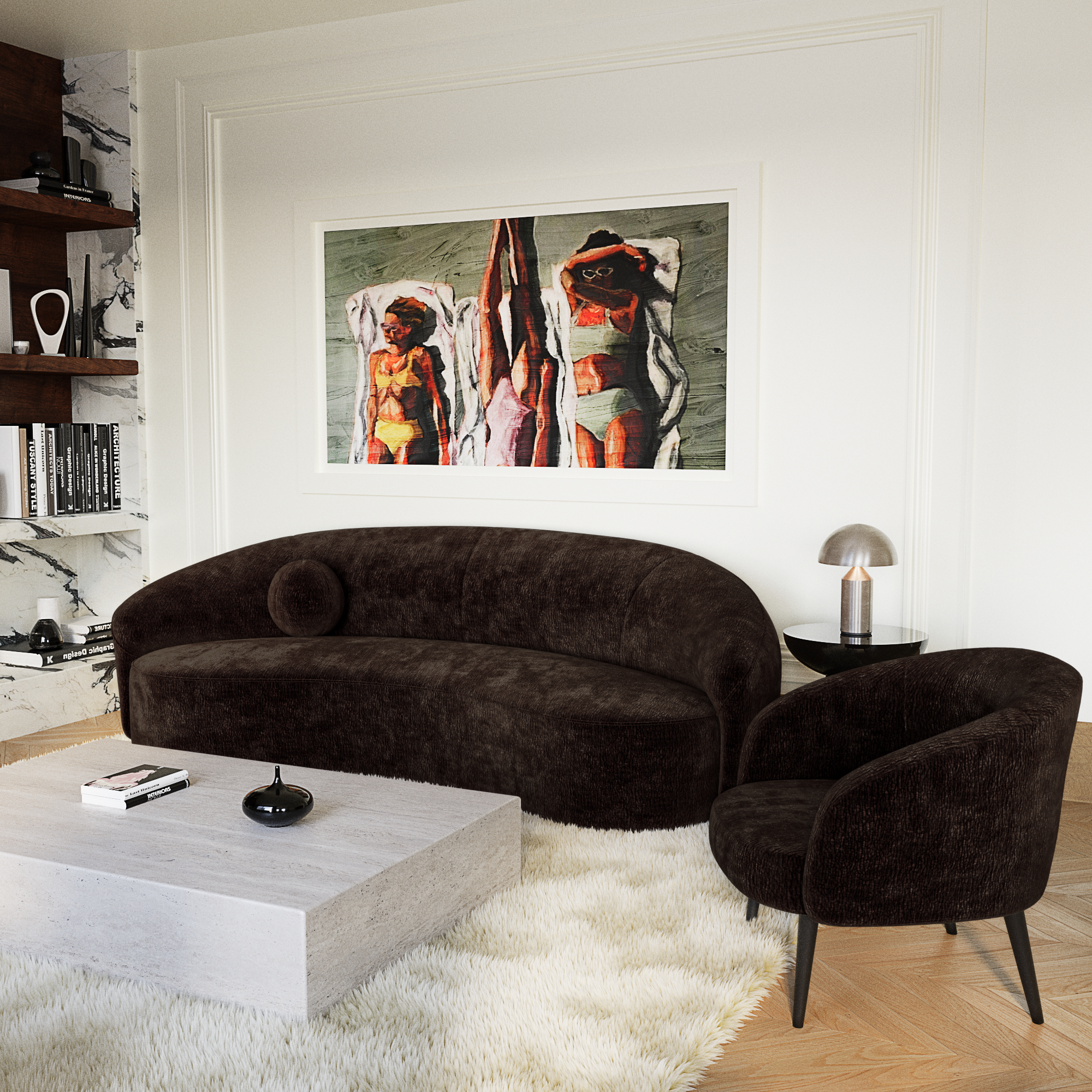
A true signature element in the living room landscape, the armchair embodies the architectural dimension of comfort . Its silhouette commands attention, establishes a rhythm in the room, and offers a deliberate pause. Far from being merely a seat, it becomes a landmark, an anchor in the space.
Its main advantage lies in the comfort it provides. With its ergonomic backrest and enveloping armrests, the chair is designed for long periods of tranquility. The most advanced models even add features designed for well-being: reclining, footrest, etc.
From an aesthetic standpoint, the variety of materials and lines allows for all kinds of expression: taut lines or enveloping curves, deep velvet or woven fabric. Each armchair can thus become an exceptional piece, interacting with the other decorative elements in the living room. It immediately conveys an impression of stability, grounding, and character.
This sophisticated seating, however, has its requirements . The size of an armchair is significant, and integrating it into smaller rooms can be tricky. Its presence can overwhelm the overall composition, reduce the perception of space, and disrupt the general balance if it's poorly chosen. Therefore, a fairly large space is necessary to accommodate the armchair .
The pouf: flexibility and conviviality personified
In contrast, the pouf boasts a flexible and spontaneous aesthetic . It doesn't seek to impose itself but rather to complement and suggest, more than to assert. Lightweight, mobile, and multifunctional, it embodies a contemporary logic of adaptability, where each piece can evolve according to its uses.
Its primary function is, of course, that of a discreet and precious seat , instantly ready to be used. But the pouf also knows how to reinvent itself, multiplying its uses without ever cluttering the space. It is the quintessential extra seat, the one you move to welcome an unexpected guest and include them in the conversation. It becomes a sturdy footrest, extending the comfort of the sofa after a long day. Adorned with an elegant tray, it transforms into a substitute coffee table, ready to hold a glass or a book.
In minimalist interiors, studios, or small living rooms, the pouf is a preferred choice due to its minimal visual impact and ease of integration . Available in a variety of sizes and textures, it complements all styles without ever imposing its presence.
It is important to note, however, that its comfort remains limited . A pouf is generally not designed for prolonged sitting. Lacking a backrest, it offers no support and can quickly become uncomfortable, relegating it to short-term use. Its visual impact should also not be underestimated. While a well-chosen pouf is often an asset, an unsuitable size or an accumulation of poufs creates an impression of visual clutter or disarray. It must therefore be chosen carefully, in harmony with the rest of the furniture.
Guiding your choice
The decision between an armchair and a pouf isn't solely based on technical criteria. It depends on your vision for your living space. Are you looking to structure or declutter? To create a calm atmosphere or suggest conviviality? To offer a comfortable personal retreat or to accommodate the unexpected with flexibility? Analyzing your own needs and overall lifestyle guides and facilitates the decision-making process.
This armchair is designed for those who want a stable and generously sized main seat , capable of becoming a centerpiece in the living room. It makes a confident statement about inhabiting the space.
On the contrary, the pouf appeals to those who live in a more confined space or who like to entertain . It slips in and adapts to the interior with ease, and simply meets the demands of daily life.
If choosing between the two is difficult, the solution lies in combining them . There's no need to pit them against each other, as they complement each other perfectly. Pairing an armchair with a pouf enriches the living room's design. The armchair serves as a focal point around which one or two poufs can be placed, ready to be used at any time. This configuration allows you to enjoy the best of both worlds: the structured comfort of the armchair for moments of tranquility, and the adaptable functionality of the poufs for when you need a change of scenery.
Together they form a balanced duo where elegance is combined with practicality, and comfort with modularity.
A living room designed with nuance
More than just a simple choice between two pieces of furniture, the reflection on the armchair and the pouf questions our way of inhabiting our spaces: the importance given to posture, movement, fluidity or permanence.
The armchair offers a structured, enveloping, and stable solution. The pouf , on the other hand, provides a light, adaptable, and spontaneous one. Each has its own distinct character, and it is in the ability to combine these two specificities—form and function—that balance is achieved.
The armchair and the pouf are not opposed: they complement each other. Provided they are chosen carefully – timeless lines, noble materials, correct proportions – they can become the perfect partners in a welcoming and profoundly elegant interior.