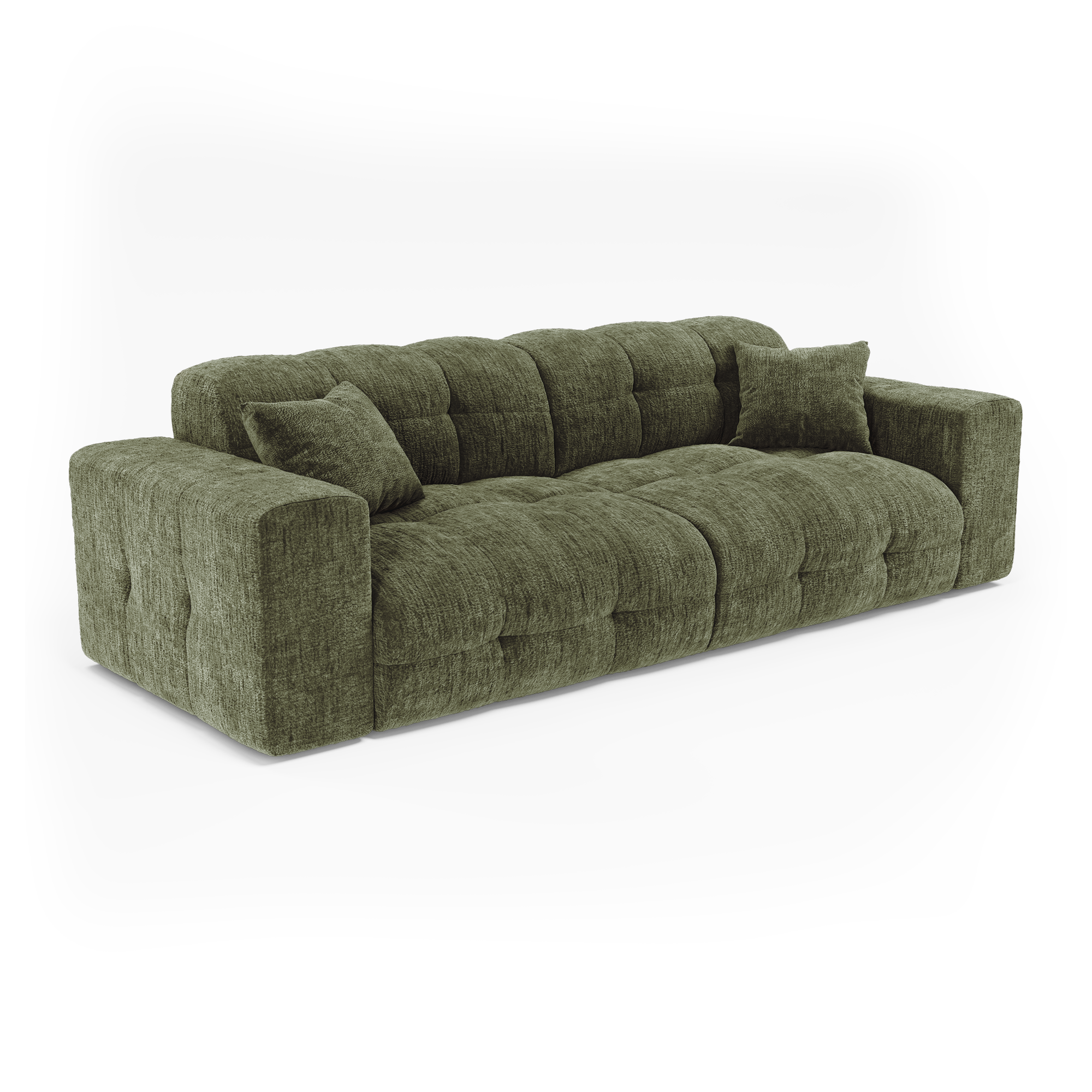

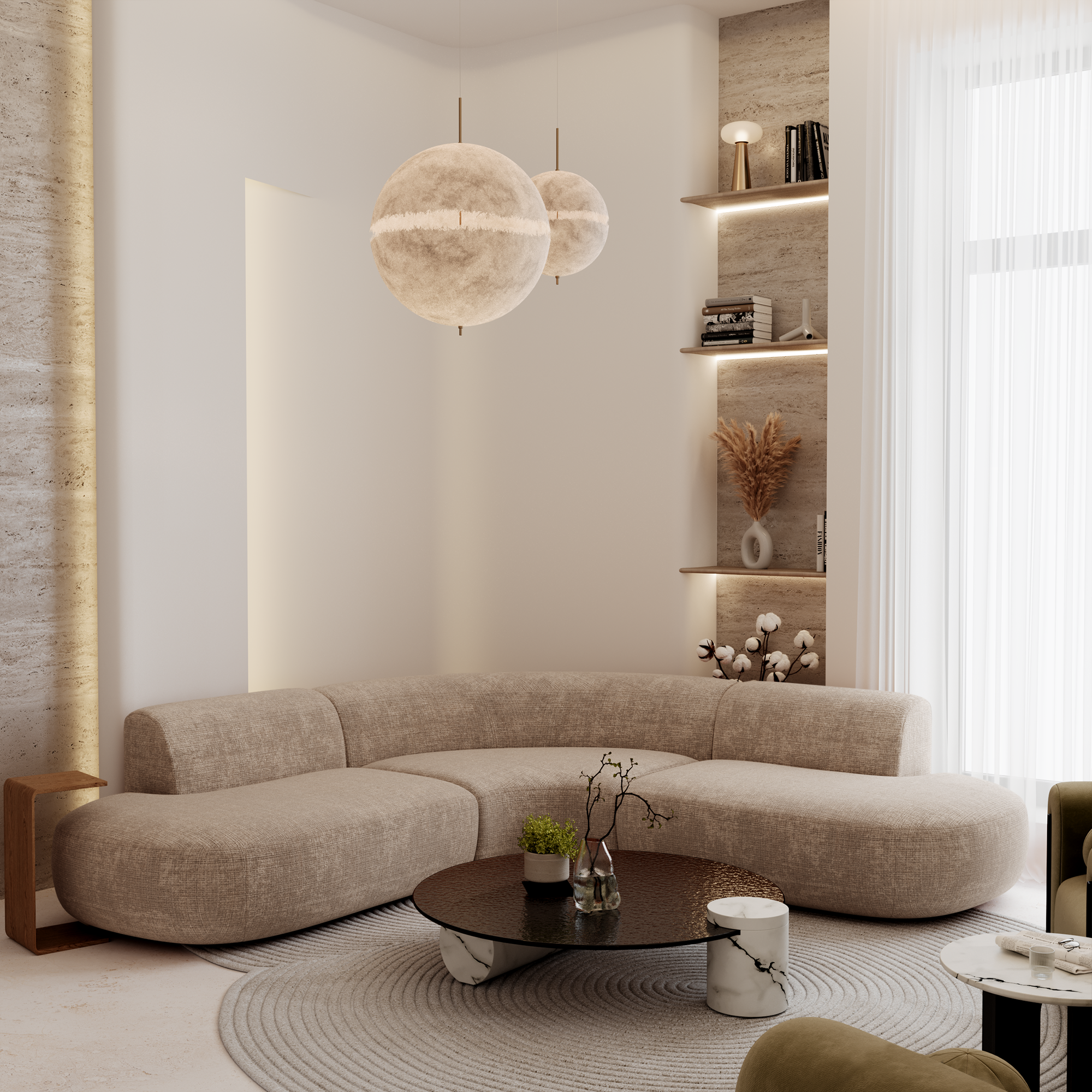
More than just a furniture choice, the corner sofa embodies a way of structuring space, directing movement, and suggesting an atmosphere. With its unique geometry, it stands out as a distinct piece, capable of defining volumes, enhancing the aesthetics of a space, and serving a variety of purposes.
At the crossroads of form and function, it invites us to rethink the organization of interiors with accuracy and intention.
A design conceived for space
A corner sofa is more than just a seat extended by a chaise longue. Its L-shaped silhouette, whether symmetrical or panoramic, is part of an architectural logic where lines are never placed randomly. By its mere presence, it suggests an organization: it guides the eye, defines circulation patterns, and provides a clearer understanding of the space.
Designed to adapt to various configurations, the corner sofa offers a wide range of shapes . Left or right corner, symmetrical double-return design, or panoramic wraparound model —each type is suited to a specific use and space. More than just an aesthetic choice, it's a deliberate design decision where function interacts with decorative intent.
Placement and accuracy of proportions
The choice of a corner sofa depends on the room's ability to accommodate it in a balanced way.
In a confined space , its placement against a wall or in a corner optimizes the surface area while preserving circulation. This arrangement promotes a smooth flow within the room.
In open-plan or through-spaces , a corner sofa can break free from walls to become a central focal point. It then structures the space architecturally, serving as a natural boundary between two rooms – primarily the living room and dining room. It becomes a visual landmark around which the space is organized without creating partitions.
Larger living rooms can accommodate larger models – panoramic or symmetrical – which then become true centerpieces. They are ideal for spacious areas, allowing for convivial, open, and welcoming seating without compromising the overall clarity of the space.
A sofa in keeping with everyday life
The corner sofa is conceived as much as an aesthetic element as a living space. It meets a variety of needs that are part of the daily lives of its inhabitants.
Some configurations favor a fixed, stable, and timeless model , perfectly suited to traditional living room use. These sofas offer generous seating and lasting comfort, without compromising on elegance.
Other, more flexible spaces call for modularity with modular or reversible corner designs . These can then adapt to evolving layouts, lifestyle changes, or changing desires. This flexibility allows for constant rethinking of the interior organization, according to current needs.
The convertible function opens up additional possibilities by offering a comfortable accommodation solution for guests, while optimizing space. It thus meets the demands of a lifestyle where the living room sometimes transforms into a spare bedroom.
The functional dimension is linked to the flexibility of contemporary life, where furniture must be a place of rest and a setting for entertaining. The corner sofa proves to be a centerpiece in harmony with the rhythms of daily life.
Aesthetic coherence
Beyond its shape, the corner sofa naturally occupies a central place in the visual perception of the space. Its aesthetic must therefore blend seamlessly into its surroundings. It can extend the existing lines, materials, and colors, or introduce a strong statement without ever disrupting the balance.
The upholstery is the sofa's primary stylistic expression. Leather captivates with its gradual patina and dense texture. It lends the sofa a graphic, structured presence, ideal for emphasizing the rigor of a timelessly elegant interior. Velvet plays with light to reveal subtle nuances: it envelops the space in a soft warmth and invites a more inviting aesthetic. Textured materials—like bouclé —introduce a tactile and warm touch, perfectly complementing natural, soft, and minimalist settings. Conversely, woven fabrics offer a more discreet touch, ideal for creating a subtle relief effect.
In addition to this, there are colors that either extend or counterbalance the effect of the material. Neutral shades —gray, beige, taupe, cream—create a calming atmosphere in which the sofa blends delicately and emphasizes the room's dimensions. They harmonize with bright and uncluttered interiors, where each element naturally finds its place. Conversely, deeper tones —brown, green, blue—assert a stronger intention. Neither too vibrant nor too muted, they give the sofa substance and visually anchor it. Bolder accents —mustard yellow, terracotta, vintage pink—can introduce a controlled contrast, highlighting a more assertive decorative choice. Used sparingly, they enliven the overall look without disrupting the harmony.
A structured arrangement
The placement of a corner sofa is not simply a practical choice. It determines the overall harmony of the living room, its visual balance, and the flow of movement and sightlines. A well-chosen arrangement enhances both the sofa and the interior architecture.
Placed against a wall , it naturally follows the geometry of the room. This classic configuration is perfectly suited to long, narrow spaces or smaller living rooms. It frees up the central area while creating a structured space for socializing.
When placed as an island , the corner sofa becomes a key design element. In rooms that flow into each other or have open layouts, it acts as a transition between different functions – living room, dining room – without creating a partition. The corner then creates a visual focal point around which the room's layout is organized.
Placed in front of a bay window or fireplace , the corner sofa creates a focal point. It establishes a dialogue between the furniture and the architectural elements, while naturally guiding movement and perspectives.
To maintain harmony, balanced proportions are essential. A sofa that's too large risks overwhelming the room; a model that's too small can lack presence. Ideally, the corner sofa should occupy about a third of the living room's floor space, without obstructing natural light or movement.
The corner sofa as a natural anchor
More than just a piece of furniture, the corner sofa structures the space, adapts to everyday life, and complements the interior design. From the choice of configuration and placement in the room to the textures, materials, and colors, every decision contributes to the overall balance. By combining functionality and visual coherence, the corner sofa naturally becomes the focal point of the living room: welcoming, elegant, and thoughtfully designed down to the smallest detail.