
What size corner sofa should I choose for my living room?
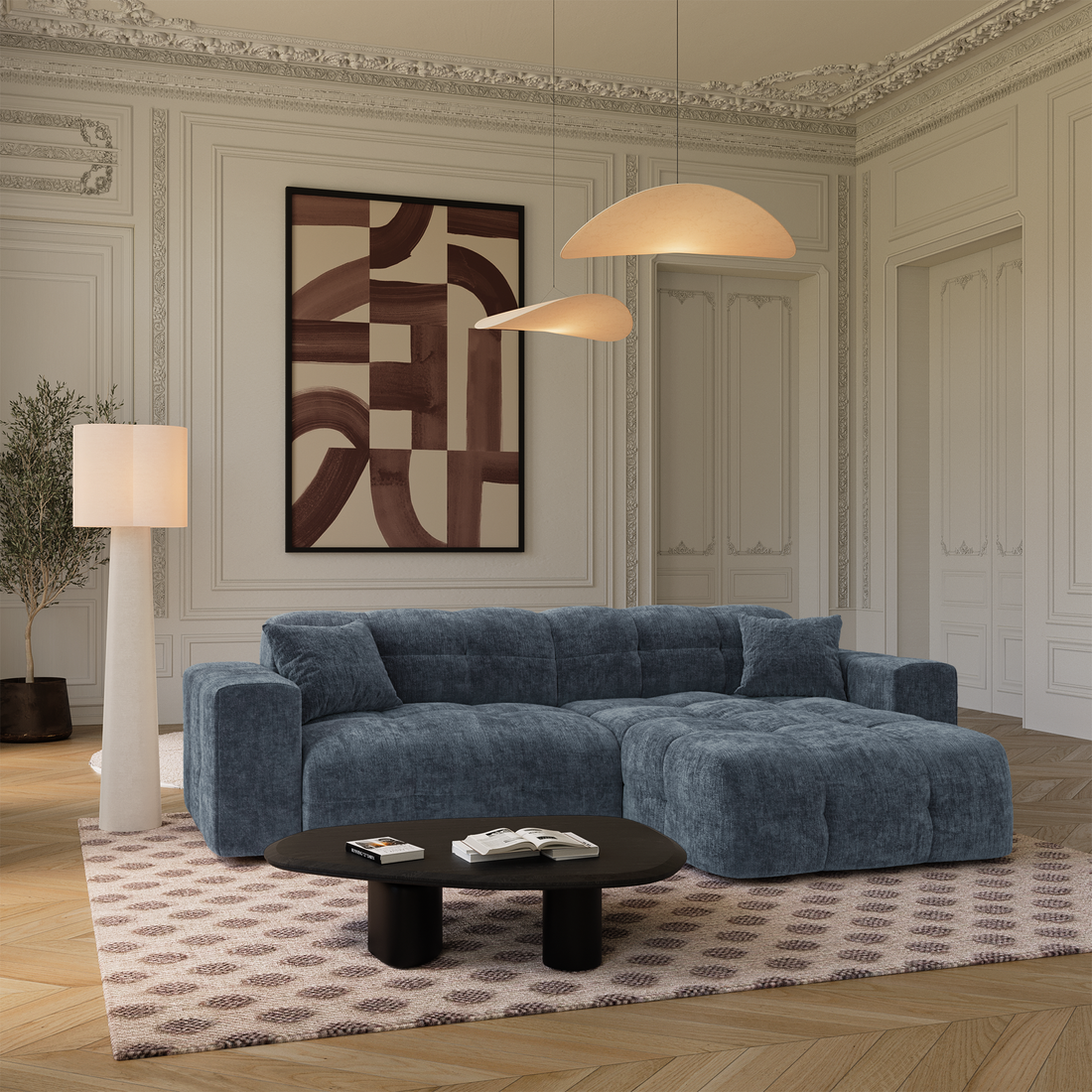
A central piece in the contemporary living room, the corner sofa combines comfort, spaciousness, and functionality. Its structured silhouette defines different areas and directs the flow of movement. However, its size must be precisely proportionate to the space it occupies. Too imposing, it disrupts circulation and visually weighs down the room. Too discreet, it blends into the background without any real impact. The key to balance and presence lies in mastering the dimensions. Understanding proportions: balance above all The elegance of a corner sofa lies not only in its design or upholstery, but also in the perfect balance of its proportions within the space. A corner sofa cannot be improvised: it requires careful consideration of the available space, the layout of windows and doors, traffic flow, and the room's intended function. To ensure easy movement, it is recommended to maintain a clearance of at least 70cm around the sofa. This open space preserves the visual lightness and ensures everyday comfort. The sofa then becomes a focal point, without encroaching on the space needed for domestic life. The role of the sofa in defining the space should also be considered. Placed in a corner , it naturally creates a relaxation area, particularly relevant in large, open-plan living rooms. In a more compact room , however, it should be integrated discreetly, without disrupting the overall harmony. Small, medium or large living room: the best corner sofa sizes to choose While every interior is unique, a few guidelines can help refine your choice based on the available space. A good match between the size of the corner sofa and the size of the room ensures a balanced presence. In a living room smaller than 20 square meters , compactness is key. Models with a short chaise longue, two-seater sofa, or discreet return integrate seamlessly. The goal is to maintain a sense of openness in the space, avoiding any feeling of clutter. Airy legs and clean lines contribute to this effect of lightness. Between 20 and 30 square meters , a more natural balance can be achieved. A three-seater corner sofa with a chaise longue or symmetrical return integrates seamlessly. The space can accommodate more generous volumes without sacrificing fluidity. Modular configurations, curved lines, and textured fabrics add character while maintaining perfect scale. Beyond 30m² , the possibilities expand. Panoramic models truly come into their own in these open spaces. Their presence becomes an integral part of the architecture, structuring the various uses of the space. Far from weighing down the overall design, their scale emphasizes the generousness of the area. Solid or enveloping lines, deep seating, and elegant finishes then make a confident statement. Subtleties not to be overlooked Beyond its overall dimensions, several factors influence the balance of a corner sofa in a room. The choice of which end to return (left or right) depends in particular on the placement of walls, openings, and the flow of movement within the room. Paying close attention to this detail prevents any feeling of clutter or an awkwardly positioned corner. Seat depth also plays a fundamental role. A deep seat invites relaxation but requires more space to move back. Conversely, a more compact seat promotes a more upright posture while saving space. Again, the choice depends on the intended use: reading, entertaining, or extended relaxation. The armrests deserve special attention. A wide armrest provides a stronger visual presence, while a thin armrest maintains a light feel. Finally, materials influence the perception of space. Textured loops , deep velvet , or a soft-touch woven fabric do not have the same visual effect on the room. Light colors lighten the overall look, while deeper shades emphasize the sofa's structure. Towards a structured and fluid living room, by Premium Interiors A well-proportioned corner sofa doesn't just fill space; it reveals it. When chosen carefully, it integrates seamlessly into the room, structuring its functions and engaging with the interior architecture. It then becomes a point of equilibrium between comfort, volume, and aesthetics. The entire Premium Interiors collection has been designed to meet this demand for precision. Each model combines perfectly balanced proportions, comfortable seating, and timeless lines. From compact sofas to generously sized configurations, the selection adapts to all types of spaces, without compromising on elegance.
Learn more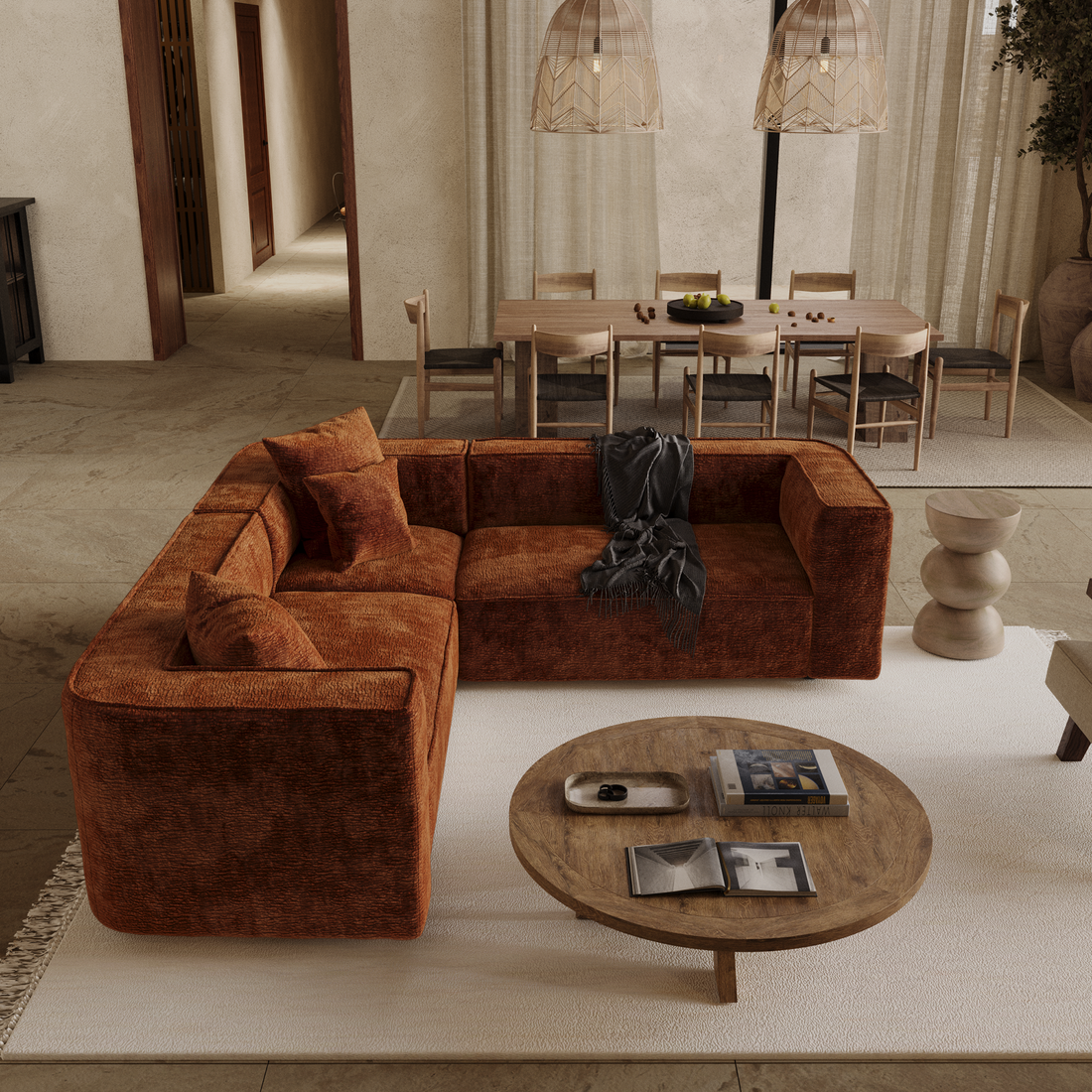
Integrating a symmetrical corner sofa into your home
A perfect balance between clean lines and generous proportions, the symmetrical corner sofa has become one of the iconic pieces of contemporary living. With its mirrored shape, it embodies a true aesthetic, where each seat complements the other with equal precision. Designed to elegantly structure space, it integrates seamlessly into a variety of layouts, from open-plan living areas to more intimate interiors – provided the room allows. However, it's essential to understand the contexts in which this model truly shines and how to subtly showcase its potential. A shape designed for visual balance The symmetrical corner sofa is distinguished by its perfectly balanced silhouette . The centered corner, flanked by two sides of equal length, creates an immediate impression of stability. This arrangement places the sofa within a framework of visual order, where each element naturally finds its place. Far from being merely functional, this rigorous geometry becomes a powerful aesthetic element in its own right. It captures the eye, anchors the living room in a clear structure, and lends the whole a quiet, almost architectural coherence. In an open or dynamic space, the symmetrical corner sofa acts as a stable base around which everything else is arranged. Distinctive yet not imposing, its visual presence is particularly appreciated in interiors that value the clarity of volumes . Symmetry here is not a decorative effect: it is an art of interior composition. A natural choice for generous volumes Designed to thrive, the symmetrical corner sofa is perfectly suited to open or well-proportioned interiors . In a square living room or a room with windows on both sides , it stands out with natural ease, quickly becoming the focal point of the space. Its format allows it to occupy space without partitioning it. It subtly defines a seating area while preserving the flow of movement around it. In a loft or contemporary architecture , where visual cues are often diluted in vast spaces, it structures the gaze and encourages a more intimate appreciation of the space. Its symmetrical shape also allows for the creation of complementary functional zones. This interplay of transitions helps to establish a welcoming and fluid atmosphere, in which each function finds its place seamlessly. Configurations tailored to every style Although its geometry is rigorously defined, the symmetrical corner sofa lends itself to a wide variety of decorative styles. Its formal neutrality allows it to blend into highly contrasting environments. In a minimalist interior , it enhances visual clarity. Placed in the center of a bright room, dressed in natural fabrics and soft hues, it contributes to a simple and controlled aesthetic. In a more classic setting , it resonates with the codes of structured elegance, creating a coherent visual continuity. The sofa's symmetry complements herringbone parquet flooring, a trumeau mirror, or a fireplace framed by bookcases. In a more organic or warm setting , it creates a subtle contrast with raw textures, natural irregularities, or handcrafted objects. The rigor of its lines then becomes a point of equilibrium in a teeming universe. Finally, its combination with the living room elements – rug, lighting, coffee table – allows for a play on visual axes. Placed with precision, these accessories complement the design of the sofa and reinforce its graphic presence without ever weighing down the overall look. Integrate it well into your decor: materials, colors, accessories While a symmetrical corner sofa makes a natural statement in a space, its full potential depends on careful consideration of its surroundings. The choice of materials, colors, and accompanying elements plays a crucial role in its harmonious integration. The colors should harmonize with the rest of the room. In a soft, mineral atmosphere, sandy beiges, stone grays, or clay tones enhance the feeling of calm. Conversely, a deep green or brown can visually anchor the sofa in a more enveloping setting while giving it a subtle distinctiveness. Textures add a tactile dimension to the rigorous form. Velvet accentuates the depth, while a looped fabric softens the overall look with its organic relief. Carefully chosen, these materials help to situate the sofa within a coherent sensory narrative. Accessories contribute to the overall balance. A generously sized central rug anchors the sofa in the space while defining a comfortable zone. A coffee table with a sculptural design, in glass or solid wood, creates a counterpoint of texture and height. Cushions allow you to play with volume, contrasts, or tonal harmonies without disrupting the continuity of the lines. The sofa's placement in the room also deserves consideration. Positioned centrally, it helps to organize the perspective. Facing a window, it enhances the natural light. It's best to avoid placing it too close to walls or in cluttered corners to maintain a balanced sense of space. When symmetry can constrain space As appealing as it may be, the symmetry of this corner sofa can become a constraint in certain contexts. Its balanced structure imposes a certain volume, which must be carefully anticipated. In a small or irregularly shaped living room, this type of sofa can quickly overwhelm the space and even impede the flow of movement . Its curved shape requires sufficient clearance on several sides to maintain a sense of lightness and avoid a cluttered appearance. Another point to consider: absolute symmetry can create a feeling of rigidity or redundancy in an already well-structured environment. In this case, it's best to soften it by introducing off-center visual elements—a floor lamp slightly recessed, an asymmetrical wall composition—to add nuance to the overall look. Installing a symmetrical corner sofa requires careful planning . It's not simply about "filling" a corner, but about creating a fluid flow around the room while highlighting natural focal points - bay window, fireplace, painting. The essence of the symmetrical sofa Conceived as both a focal point and a convivial space, the symmetrical corner sofa embodies a rare form of harmony. Its balanced geometry, its ability to structure spaces, and its stylistic adaptability make it a demanding yet profoundly rewarding choice. In a well-designed interior, it becomes much more than just a seat: a center of gravity, a guiding line, sometimes even a discreet manifesto of functional elegance.
Learn more
Optimizing a small space with precision
Far from being a constraint, small spaces encourage a more sensitive, more essential approach to living. They demand thoughtful choices, a certain aesthetic boldness, and a commitment to quality to optimize every square meter. It's an invitation to rethink our interiors with intelligence and creativity. At Premium Interiors, this philosophy resonates particularly strongly. Elegance, functionality, and timelessness are not reserved solely for vast spaces. On the contrary, they are fully expressed when every detail matters and the furniture pieces reflect a balanced and sophisticated vision of everyday life. Understanding the challenges of optimization Optimization isn't about accumulating, but about orchestrating. The goal is to create a fluid and calming environment , where the eye can move freely and the mind finds peace. It's about designing a space where refinement isn't expressed through abundance, but through the relevance and precision of each element. With this in mind, the selection of pieces must meet a dual requirement. They must embody the soul of the place while also responding subtly to functional constraints. Declutter to select the essentials The first step in this transformation is selection , which begins with purification. Overcrowding a small space is the most common mistake, as it stifles the light and makes the atmosphere feel heavy. The alternative lies in the deliberate selection of a limited number of statement pieces . For example, a sofa with an iconic silhouette can single-handedly structure the living room and give it a strong identity. Its sculptural presence is enough to capture attention and define the character of the space, making the accumulation of small accent pieces superfluous. Around this central element, the rest of the room is discreetly arranged . Storage becomes invisible, integrated into the architecture or concealed within the furniture itself, thus preserving the room's fluidity. If an accessory is present—a throw, a cushion , or a piece of handcrafted ceramic—it should remain understated. Invest in multifunctional furniture In small spaces, every piece of furniture must do more without ever being too bulky. This is where design truly comes into its own: a piece of furniture becomes a space-saving solution , incorporating ingenious functionality . Modular and convertible sofas are a perfect example of this. The modular sofa reconfigures space according to circumstances and fits remarkably well into a small space to create visual fluidity . Our PLUM model, in particular, is ideal for offering flexible layouts thanks to its depth and inviting proportions. It adapts easily while creating a balanced and harmonious space. A far cry from the mechanisms of yesteryear, today's convertible sofa systems combine ease of use with impeccable design. They allow you to transform an elegant living room into a comfortable bedroom , without compromise. The QUINN sofa is a perfect example. Its express mechanism allows for instant transformation into a true 140 cm bed. An ideal solution without sacrificing elegance. Some convertible sofas also conceal a storage compartment , often essential for smaller spaces. Ideal for storing blankets, sheets, or pillows, this piece of furniture with three uses—sofa, bed, storage—frees up precious space. Our LIOR model cleverly combines the comfort of a sofa bed with the advantage of integrated storage. This same ingenuity is found in furniture with hidden storage. A coffee table with clean lines can conceal drawers for everyday items, freeing up surface space. A bench placed at the foot of the bed or in an entryway combines seating and storage. This functional discretion is the hallmark of thoughtful design, which anticipates needs without ever compromising aesthetics. Exploiting verticality and light Visually enlarging a space is a subtle interplay of illusions and perceptions. Natural or artificial, light is the primary element. Light or neutral colors on the walls and major furniture pieces serve as a backdrop, reflecting light to create a sense of spaciousness. The use of large mirrors, judiciously placed to reflect an interesting perspective, dramatically multiplies the perceived size and brightness. Exploiting verticality is another fundamental strategy. By drawing the eye upward, a room feels taller and more spacious. Slim, elegant wall shelves that reach the ceiling free up floor space while providing ample storage. This architectural feature energizes the volume and transforms a simple wall into a graphic and functional composition. Multiple light sources sculpt the space, eliminate shadows that make it feel smaller, and create a variety of inviting atmospheres. The art of revealing the essential Ultimately, optimizing a small space is an exercise in balance and precision, far removed from any notion of compromise. It rests on the combination of three fundamental principles: the discipline of selection, favoring a single statement piece over mere accumulation; the ingenuity of multifunctional furniture that serves its purpose without compromising aesthetics; and the mastery of light and verticality to redefine the perception of space. Mastering this art means transcending the constraints of limited surface area to create an interior whose harmony and coherence alone make it truly magnificent.
Learn more
Color trends for high-end decor
The year 2025 marks a return to the very essence of refinement. Far from decorative exuberance, contemporary elegance is now expressed through measured palettes, enveloping hues, and subtle harmonies. In this spirit, color regains its fundamental role: to reveal space with precision, to highlight the nobility of materials, and to create soothing and unique atmospheres. The dominant, understated and organic base to structure the space To create a high-end atmosphere, the choice of dominant colors leans towards warm neutrals and earthy tones, true pillars of a timeless decoration. Mocha mousse, the new sophisticated neutrality Named Pantone's Color of the Year, Mocha Moss stands out as a soft and enveloping alternative to classic brown . This shade infuses rooms with subtle warmth while harmonizing beautifully with muted shades of sage green, grayish blue, or dusty rose. Applied to a solid wall, it enhances living or relaxation spaces with understated elegance. Beige, sand, cream for a soft and permanent light Light neutrals retain their timeless status. Beige, sand, or cream structure the space without ever weighing it down. These shades provide an ideal backdrop to reveal the richness of raw materials—solid wood, veined marble, full-grain leather—while bringing a sense of serenity and visual continuity. The artisanal soul of terracotta and caramel To lend the space a warmer feel , earthy tones , inspired by natural pigments, are subtly introduced. Matte terracotta, rich caramel, and cinnamon brown evoke the material in its most authentic form. These shades find their place on a wall, in the upholstery of a velvet sofa , or on a ceramic object. Deep accent colors to assert character Once the chromatic base is established, the palette is enriched with bolder touches. Accent colors play a role of controlled contrast , giving the decor its personality while maintaining a certain restraint. Organic green, between grounding and calming Deep greens —olive, sage, moss—are essential. Closely linked to nature, they create a subtle connection between indoors and outdoors . Whether used as an accent wall or in the choice of a velvet armchair , they harmonize perfectly with metallic finishes (chrome, brushed brass). Combined with light or dark woods, they create serene, balanced, and decidedly contemporary atmospheres. A muted horizon with blue From pastel blue to midnight blue, blue remains a safe bet for creating balanced spaces . In a bedroom, sky blue promotes calm and relaxation. Used in a library or formal room, midnight blue introduces a structuring visual density. Combined with warm metals or noble materials, it suggests stability and timelessness. The structuring contrast of dark hues In a bolder vein, dark tones offer valuable visual anchoring . Slate gray, subtle and rich, is perfect for a basement or workshop. Conversely, charcoal black, used on furniture legs, pendant lights, or frames, defines the structure of the space without ever darkening it. These kinds of shades demand impeccable finishes and precise application to maintain the overall light balance. Bright touches to awaken harmony To liven up the palette without breaking its harmony, certain bright shades appear in small touches, often occasional but always meaningful. The measured bursts of mustard yellow Deep yet luminous, mustard yellow should be handled with care. A graphic cushion , a piece of art, or a ceramic can be enough to enliven a neutral setting. They bring brightness and vibrancy while maintaining a certain sophistication, especially when combined with cream or taupe backgrounds. The soft pigmentation of the orange hues Drawn from nature and light, coral, apricot, or amber orange soften even the most understated compositions . They find their place on textile accessories, a throw, a table lamp, or a small lacquered piece of furniture. Their effect is all the more striking when used sparingly, like a chromatic breath in a muted setting. The consistency between materials, finishes and monochrome While color structures visual perception, it is the material that reveals its depth. In 2025, refinement will be achieved through perfect harmony between hues, textures, and finishes . Natural materials and matte finishes The choice of materials remains paramount. Fine wood, travertine, raw stone, and full-grain leather lend a tactile authenticity that transcends mere decoration. As for the finishes, they are matte or subtly satin. They discreetly absorb light and enhance the feeling of understated luxury. Discreet metals for refined details Aged brass, polished chrome, or patinated bronze act as elegant punctuation marks . Applied to light fixtures, handles, or furniture frames, they capture the light without ever dazzling it. Subtly placed, these metallic details infuse a controlled modernity into interiors rooted in the tradition of beauty. The audacity of monochrome Sometimes, the ultimate in sophistication lies in the rejection of contrast. An interior designed in a single color scheme—beige, brown, green—creates a remarkable impression of unity and fluidity. But when monochrome is combined with plays on textures and volumes, it generates an enveloping and almost architectural effect . Towards a balanced palette for a high-end interior By 2025, color will be part of a holistic approach to space. Each hue will be chosen for its ability to interact with materials, structure light, and enhance the character of the space. A carefully curated palette will thus become the most fitting expression of a high-end interior: understated, timeless, and unique.
Learn more
The subtle balance of the contemporary sofa
At the heart of the living space, the sofa is no longer limited to its function as a seat. It has become the central piece, the anchor point around which the aesthetics and conviviality of an interior revolve. The contemporary sofa, in particular, stands out as a discreet yet assertive style statement: clean lines, controlled comfort, and understated elegance. Stripped of the ornamental excesses of the past, it offers a vision of design based on essentials. Form follows function, and every detail finds its precise place. A contemporary style with well-defined codes Contemporary design is defined by its ability to capture the spirit of the times. The resulting sofa reflects this philosophy: it is characterized by radical simplicity . The lines are clean, crisp, and precise, free from any unnecessary embellishment. This structural restraint highlights the quality of the materials and the balance of proportions. The forms navigate between geometric rigor and organic fluidity . Some creations adopt a rectilinear, almost architectural structure, while others draw inspiration from natural curves to offer more fluid and sculptural silhouettes. These forms create a feeling of softness and a sensation of total comfort. The richness of the materials also reflects this quest for balance . Leather and fabric remain timeless choices, selected for their elegance and durability. As for velvet, its shimmering sheen and tactile quality add a touch of timeless sophistication. Furthermore, the rise of environmental awareness encourages a preference for responsible materials, in a desire to reconcile aesthetics and sustainability. The color palette of the contemporary sofa oscillates between understated elegance and bold statement pieces . It can adopt neutral and soothing hues—grey, beige, cream, taupe—to blend harmoniously into any interior. Conversely, it can become a striking and assertive piece, adorned with vibrant and deep colors—midnight blue, emerald green, terracotta, mustard yellow. A signature detail of the contemporary sofa lies in its base . Often slender and discreet, made of metal or wood, the legs give an impression of lightness , accentuating its modernity. New expressions of comfort in 2025 The contemporary sofa is asserting itself more than ever as the epicenter of the living room, meeting new expectations in terms of comfort and flexibility. Sculptural and organic forms take center stage. Volumes become generous, seats deep, curves enveloping. With an "XXL cocooning" effect, comfort is absolute. Modularity is proving essential. The sofa is no longer a fixed piece of furniture, but becomes a flexible, evolving system capable of adapting to different lifestyles. Independent modules can be combined and reconfigured to create personalized spaces, according to desires and uses. This desire for total comfort is accompanied by a trend that could be described as “ XXL minimalism .” The shapes retain their clean lines, but the dimensions are enlarged. Low, deep seats encourage a more relaxed posture, blurring the lines between the formal living room and the relaxation space. At the same time, eco-responsibility is becoming essential. Materials are recycled, wood comes from sustainably managed forests, foams are no longer harmful, and manufacturing processes are redefined to limit the carbon footprint. Contemporary design thus becomes a vehicle for meaning and values. The key advantages of the contemporary sofa The success of the contemporary sofa lies in a masterful balance between aesthetics and functionality . Its advantages make it a piece that is both desirable and relevant, meeting the most demanding expectations of modern living. Beyond its appearance, the contemporary sofa possesses remarkable versatility . Its clean lines and timeless design allow it to blend seamlessly into a variety of environments—from classic and minimalist to even industrial styles. It doesn't impose a single style but rather elevates it, enhancing the character of each space. The elegance of the contemporary sofa is never separate from its function. Every element of its design is conceived to meet modern needs. Comfort is paramount, ensured by generous seating and high-quality materials. Its versatility is demonstrated through modular systems, adapting to changing spaces, or convertible models for sleeping functionality. The strength of contemporary design also lies in its adaptability . A vast palette of materials—leather, velvet, and more—is combined with an extensive range of colors. This diversity, coupled with a wide choice of dimensions, creates a piece that is almost bespoke, integrating seamlessly and reflecting the unique character of the interior. The difference between contemporary and modern It is common to confuse the terms “modern” and “contemporary”, yet they refer to two distinct realities . Modern style is linked to a specific historical movement of the 20th century , embodied in particular by the Bauhaus movement or Scandinavian design. It is based on formalized principles, rooted in a bygone era. As for contemporary style , it is by definition “ what is being done now ”. It reflects the present time, is constantly evolving, draws on multiple influences – including modernism – while integrating technical innovations and current sensibilities. Where modernity is a fixed point of reference, contemporary remains open, alive and adaptable . The essentials of a modern interior The success of the contemporary sofa isn't solely based on its aesthetics. Designed for comfort, it's built to last , thanks to timeless lines, high-quality materials, and meticulous craftsmanship. Some models incorporate adaptable features—such as sleeping and storage—while maintaining a clean, minimalist design. It ages gracefully, never going out of style, adapting equally well to classic and unconventional interiors. Its aesthetic and material longevity makes it a thoughtful choice, both decorative and functional, capable of keeping pace with evolving living spaces without compromising its identity. In short, the contemporary sofa transcends its status as a mere object. It blends modern comfort, essential design, and subtle luxury, with a focus on quality, functionality, and the environment. A central element of the home, it becomes a hallmark of today's lifestyle.
Learn more
The beige sofa: the must-have item for summer 2025
When warmer weather arrives, the desire for light, airiness, and renewal extends into our homes. Furniture becomes more ethereal, colors soften, and the atmosphere focuses on what truly matters. Among the pieces that perfectly embody this transition to summer, the beige sofa stands out as an obvious choice. Subtle, luminous, and surprisingly versatile, it aligns with the season's trends and becomes the answer to our need for serenity, harmony, and lasting beauty. A shade that enhances the light Before being a color, beige is a light-reflecting agent . In the color spectrum, it occupies a unique place: that of a revealer. It doesn't simply reflect light, but captures it, modulates it, and diffuses it with unparalleled softness. Therein lies its primary nobility. In a summer interior, bathed in generous sunlight, the beige sofa becomes the instrument of a sensitive architecture . It neither absorbs nor dazzles, but rather reflects. It establishes a diaphanous atmosphere, visually enlarging the space and offering the eye a fluid and serene flow. It acts as a discreet visual anchor point, around which other elements can express themselves. This luminous presence lends the beige sofa an almost structural dimension . It redefines the balance of a space and helps create an atmosphere where one can breathe, where one slows down. It's an aesthetic of calm, of controlled detail and controlled light. The tactile dimension While nuance is essential, the modernity of the beige sofa in 2025 lies primarily in its texture . Elegance is now measured less by lines than by feel. It's a luxury that can be touched and experienced every day. The season's key materials are an ode to the senses. With its generous loops, the bouclé fabric sculpts the seat like a tactile cocoon. Its texture animates the surface with subtle plays of light and shadow, giving the sofa unprecedented visual depth. As for velvet , it sheds all nostalgia. In a ribbed or textured version, it plays with light, introducing an enveloping softness that suggests a certain preciousness. Each fabric becomes a language. Through its chromatic simplicity, the beige sofa fully showcases the richness of these materials. It is a sensory haven, a place of respite whose sophistication is revealed to the touch. A sofa at the heart of all compositions The strength of the beige sofa also lies in its ability to create a dialogue . It is not a solitary statement but a silent pivot around which an entire decorative composition is structured. It allows for all kinds of bold choices and harmonies. Combined with raw and organic materials - solid wood, rattan, handcrafted ceramics - the beige sofa creates a scene of serenity, evoking summer houses with clean lines. Juxtaposed with more contemporary lines —black steel, smoked glass, raw concrete—this piece of furniture also reveals its architectural dimension. It softens the rigor of minimalism, introducing warmth without disrupting the purity of the volumes. It then becomes the human counterpoint to modernity, a place of equilibrium between controlled coolness and undeniable comfort. A chromatic foundation for summer One of the most persistent misconceptions about beige is that it's supposedly bland. However, it's precisely the opposite. This color acts as a backdrop, meaning it welcomes, reveals, and enhances other hues. It never dulls the atmosphere but, on the contrary, magnifies it . Thus, bold colors —sage green, terracotta, midnight blue, or mustard—find an ideal setting in beige. They gain intensity without ever becoming excessive. Lemon-toned cushions , ochre linen throws, eclectic rugs, or abstract paintings can express themselves freely against this soft and balanced backdrop. The beige sofa doesn't impose itself but enhances the surrounding décor. It is this ability to orchestrate nuances that makes it so indispensable. It allows for the creation of coherent universes , while leaving the door open for stylistic experimentation. A timeless and lasting choice Beyond its aesthetic appeal, the beige sofa embodies a thoughtful choice , based on timelessness. Where other shades can become tiresome, this color evolves, transcending seasons without losing its freshness. It adapts to the transformations of an interior, accompanies the evolution of a lifestyle without ever becoming outdated. This sophisticated neutrality makes it a foundational piece. It is the anchor point around which the space is rebuilt, evolving with time and desires. It transcends styles and trends, never becoming static. This is what makes it truly indispensable: because it combines aesthetics, adaptability, and durability. At Premium Interiors, this approach resonates perfectly. Each of our beige sofa models is designed as a statement piece, combining balanced lines, noble materials, and a subtly crafted palette. Here, beige isn't an option but a given: the color of a serene, luminous interior, imbued with a calm and essential elegance. Beige, a contemporary obvious choice The beige sofa perfectly encapsulates the aesthetic aspirations of summer 2025. It embodies light without being overpowering, comfort without heaviness, and luxury without excess. It's a piece that structures the space, soothes the eye, and enhances the overall look. It doesn't seek to dominate, but rather to reveal. It offers a perfect response to contemporary demands: simplicity, quality, and durability. Through it, a lifestyle emerges: the essential becomes sublime, and every detail tells a story of masterful balance. Its elegance and ability to create unity make it indispensable for this summer—and for many seasons to come.
Learn more
The elegance of classic style in our interiors
Certain aesthetics transcend time without ever losing their allure. With its formal rigor and symbolic depth, the classical style is capable of uniting tradition and timelessness. It embodies a vision of elegance founded on the mastery of proportions, the nobility of materials, and an attention to detail. In the world of interior design, it remains an absolute benchmark, both stable and inspiring. The origins of the classical style The classical style finds its origins in the major European artistic movements, whose founding principles it adopts. From Greco-Roman antiquity to the Renaissance, by way of 17th-century French Classicism, it draws on a solid cultural heritage that still structures the design of many interiors today. This style is characterized by a search for order and symmetry . Volumes are balanced, compositions are organized around clear axes, with particular attention paid to proportions. This rigor gives spaces a feeling of stability and coherence. The sophistication of the classical style lies in its meticulous attention to detail , where every decorative element is carefully considered. The presence of moldings emphasizes the architectural lines, while gilding punctuates the surfaces with restraint. The woodwork is crafted with exceptional skill, and marquetry adds richness without overwhelming the space. This results in a discreet elegance, grounded in mastery and precision. As for the materials chosen, they embody permanence and nobility . Solid wood, sculpted bronze, delicate silks, natural stones, each of them gives a durable and distinctive appearance. The style is thus distinguished by its ability to transcend time without ever going out of style. Rooted in a strong cultural heritage, it also engages with the particularities of today. Creating a classic interior The iconic furniture of the classical style is distinguished by its generous and balanced forms . Sofas and armchairs often feature medallion backs, whose curves lend an air of both comfort and majesty. Consoles, sideboards, and chests of drawers are adorned with refined marquetry or gilt-bronze details, testaments to meticulous craftsmanship. While present, these pieces remain proportionate, structuring the space without overwhelming or dominating it. The architectural and decorative elements complete this arrangement with great precision. Moldings, cornices, overmantels, and woodwork define the volumes and perspectives, lending a certain depth to the whole. The fireplace, often made of marble or stone, occupies a central position, the true heart of the room. Finally, elegant chandeliers, mirrors with antique frames, and gilded wall sconces reinforce this refined atmosphere, blending functionality and beauty. As for the finishes and materials, these contribute fully to the feeling of quality and comfort . Solid oak parquet and marble floors bring elegance, while fine textiles – velvet, linen, or silk – adorn curtains, cushions , and rugs. These varied textures create a subtle interplay between softness and structure. Finally, the color palette is based on a neutral palette of ivory, beige, and taupe to create a luminous and calming atmosphere. Rich and deep accents, such as burgundy, midnight blue, and patinated gold, are added to punctuate and enliven the overall effect. The palette must, however, remain soft and muted to envelop the space in a harmonious and welcoming ambiance. Reinterpreting the classic style with precision Classical style can evolve without denying its foundations. Far from being static, it offers an ideal basis for contemporary reinterpretations, provided that its sense of proportion, detail, and quality is preserved. The first approach involves introducing modern elements to contrast with the traditional decor. A minimalist coffee table, an armchair with clean lines, or a contemporary artwork can coexist with more ornate, classic pieces. This interplay of contrasts creates a visual lightness while highlighting the richness of the period furniture. Modernizing classic style also means knowing how to lighten it without diminishing its presence . It's not about erasing its defining features, but about clarifying its interpretation. For example, highlighting a few key pieces (carefully showcased) allows their unique character to shine. A marquetry sideboard, a gilded mirror, or a crystal chandelier can truly express themselves when placed within a minimalist setting. Well-managed contrasts play a crucial role here. The combination of antique and contemporary materials creates a stimulating tension. Solid wood pairs perfectly with black metal, velvet with polished concrete, and period moldings with minimalist furniture. These combinations enrich the décor and establish a harmonious dialogue between past and present. The result is a renewed classic style, more airy, more personal, but still faithful to its original spirit. An elegance that transcends time Rooted in a rich historical heritage, the classical style is distinguished by its sense of balance, the quality of its materials, and the refinement of its details. Structured by precise codes (proportionate furniture, symmetrical decor, meticulous finishes), it creates interiors that are at once stable, harmonious, and profoundly elegant. But far from being stuck in a bygone aesthetic, the classical style lends itself to subtle reinterpretations today. By lightening compositions, playing with contrasts of materials, or simply integrating contemporary elements with restraint, the style continues to evolve without ever losing sight of timelessness and mastery. Discover our collection of classic sofas , inspired by the heritage of style and designed to fit into today's interiors.
Learn more
The most beautiful colors for the sofa and interior
In a high-end interior, every detail contributes to the overall harmony. Among these, the choice of colors plays a strategic role: it structures the space, creates points of visual tension, or, conversely, establishes a serene atmosphere. As the centerpiece of the living room, the sofa becomes the starting point for this subtle interplay of colors, transforming the space into a place of character. The key role of colors in balancing the living room Color acts as an invisible yet essential component of interior design. It structures the perception of a space, defines its atmosphere, and shapes its character. Light colors visually enlarge a room, creating a sense of openness and lightness. Deeper tones create a more enveloping and structured, sometimes more intimate, ambiance. The choice of colors around the sofa also contributes to this subtle balance. The hues of the walls, floors, rugs, and accessories should complement the sofa's color without ever overpowering it. A tone-on-tone harmony creates a soft and seamless ambiance; a well-considered contrast offers an interesting interplay of visual depth. The overall effect should remain coherent, fluid, and easy to navigate. The chosen color palette directly influences the overall atmosphere of the room. Some tones induce relaxation, such as natural or soft shades; others instill rhythm, dynamism, or even a form of sophistication. Colour is never simply “pretty”: it creates a true visual experience . Enhance the sofa with well-coordinated color choices. To truly showcase a sofa , it should be considered the starting point of a composition. A well-chosen color allows the room to be structured around a strong visual focal point, without imposing a rigid decorative feel. If the sofa is a bold color, the surrounding elements can opt for understated elegance with light, natural, or mineral tones. Conversely, a neutral sofa provides an ideal canvas for introducing bolder shades in small touches. Next come the accessories — cushions , curtains, throws, decorative objects—invaluable tools for balancing the overall look . They can echo the sofa's color, extend it, or create a contrast, depending on the desired effect. Their role is also to create rhythm, particularly through the use of varied materials: bouclé, velvet, and so on. Combined with a restrained color palette, they add depth without overwhelming the space. Pitfalls to avoid in order to preserve visual harmony A successful composition often relies on what one chooses not to do. For example, light is a crucial and often overlooked factor. The chosen color can change completely depending on the room's exposure to light—natural or artificial. What might appear warm in daylight can become dull or overly yellow in the evening. Anticipating these variations ensures a consistent color palette throughout the entire lighting cycle. Another common mistake is using too many colors without a clear direction . A palette that's too scattered, without a clear hierarchy, breaks the visual unity and makes it difficult to read the space. It's better to stick to two or three dominant colors, perhaps complemented by a subtly used accent color. The 60-30-10 rule provides a simple and effective framework: 60% of a main color, 30% of a secondary color, and 10% of an accent color. Some inspiration for a balanced and elegant living room Certain color combinations naturally embody elegance. In a living room, a grey sofa harmonizes with cushions in powder pink and sage green, creating a calm and contemporary atmosphere . For a bolder effect, a midnight blue model , accompanied by details in charcoal black and brushed brass, establishes a graphic and modern aesthetic. Warm hues, particularly terracotta , blend subtly with beige rugs and mustard cushions , creating a sunny and inviting atmosphere . Conversely, an ecru sofa placed within a minimalist setting creates a chic, understated look inspired by Japanese design. For a Mediterranean ambiance , a beige sofa punctuated with deep blue decor and terracotta evokes the light of the south while maintaining a certain aesthetic restraint. When color becomes balance The sofa, the central element of the living room, single-handedly structures the perception of space. Around it, each color finds its place, subtly blending and balancing. A carefully considered color palette not only enhances the sofa but also opens up, calms, or energizes the room. Between dominant hues and subtle accents, between texture and light, the whole creates a silent dialogue, resulting in a coherent and refined atmosphere.
Learn more
Living room trends in 2025
By 2025, the living room will be a fully-fledged living space, designed with high standards and balance. Comfort, aesthetics, and quality materials will be central to design choices. Lines will become more enveloping, materials will gain texture, and color palettes will be meticulously crafted, creating harmonious and visually soothing interiors. A rich but nuanced color palette The living room's color scheme leans towards a more subtle and structured approach. Neutral tones remain a preferred base. Off-white, light gray, taupe, and beige create a bright and balanced atmosphere , easily combined with bolder elements. Meanwhile, some vibrant colors are making a comeback. Bright blue, emerald green, and mustard yellow, in particular, are reminiscent of the 1970s, but reinterpreted in a contemporary and restrained way . Otherwise, natural shades of green harmonize with earthy tones like sand, ochre, and brown. This season, several colors dominate our interiors. Brown offers a rich depth; terracotta brings a warm ambiance; and beige , timeless, infuses a soothing atmosphere. Added to this is Pantone's 2025 Color of the Year: Moss Moss , a milky brown with warm, enveloping undertones, perfect for creating contemporary, cozy spaces. Between raw textures and textile softness Materials are no longer simply decorative. Today, they reflect a desire to refocus space around what is durable, sensitive and true, revealing a quest for stability and coherence. Raw materials are essential for their ability to structure space with strength and simplicity. Wood, whether light or dark, brings natural warmth while asserting a certain rigor in its lines. It satisfies a desire for authentic materials, free from treatment or artifice. As for marble, it captivates with its mineral appearance, its unique veining, and its timeless quality. Natural materials like stone or ceramic respond to this quest for authenticity . Their irregular appearance and organic feel lend an almost sensory dimension. They reintroduce a sense of truth into interior design, reflecting a desire to slow down and prioritize sustainable materials. Metals are making a strong comeback, used as a subtle contrast to natural materials. Whether it's aluminum, wrought iron, brass, or chrome, their shine highlights volumes, structures pieces, and lends visual rhythm to the whole. Their popularity also stems from their versatility . They can accentuate an industrial, Art Deco, or minimalist aesthetic depending on how they are positioned. This year, in particular, they are being used as graphic or sculptural elements, balancing the softness of textures. In terms of textiles, velvet is a must-have this year due to its rich and enveloping feel. Its dense texture and soft touch provide comfort. Sculptural furniture and enveloping forms The year 2025 sees a departure from rigid furniture shapes, embracing more rounded and fluid silhouettes . The sofa remains the central element but offers more welcoming proportions – generous volumes, deep seats, continuous curves and soft lines. Signature pieces, the armchairs also feature sculptural and enveloping shapes, homogeneous finishes and a strong presence in the space. Trendy styles The Chic style remains a timeless choice. It favors noble materials—marble, glass, or dark woods—in a deliberately understated atmosphere, structured by plays of natural and diffused light. Velvet plays a significant role, particularly on seating. The Nature style embodies a quest for authenticity. The colors are soft, even earthy, and the materials are natural and textured – light wood, stone, porcelain, linen, hemp, wool. The overall effect creates a visually soothing world, grounded in the essential. The Vintage Retro style is making a comeback in a revisited version. Bold colors - orange, green - geometric patterns and rounded shapes evoke the 70s, with low furniture, often with satin finishes. Inspired by Japanese design, the Wabi-Sabi style celebrates the beauty of imperfection. It relies on textured materials—such as chamotte plaster, raw wood, and frosted glass—and clean lines. The goal is to create a visually simple yet expressive space, where every element has a purpose. This year's latest style trend is the charm of cocooning , which relies on a palette of browns and warm tones, soft textiles, and gentle lighting. It prioritizes a comfortable and reassuring atmosphere where every detail contributes to an immediate feeling of well-being. Towards a living room designed to last Living room trends in 2025 reflect a strong desire to create interiors that are elegant, functional, and sustainable. Far removed from fleeting fads, they are based on the use of authentic materials, enveloping shapes, and a subtly crafted color palette.
Learn more