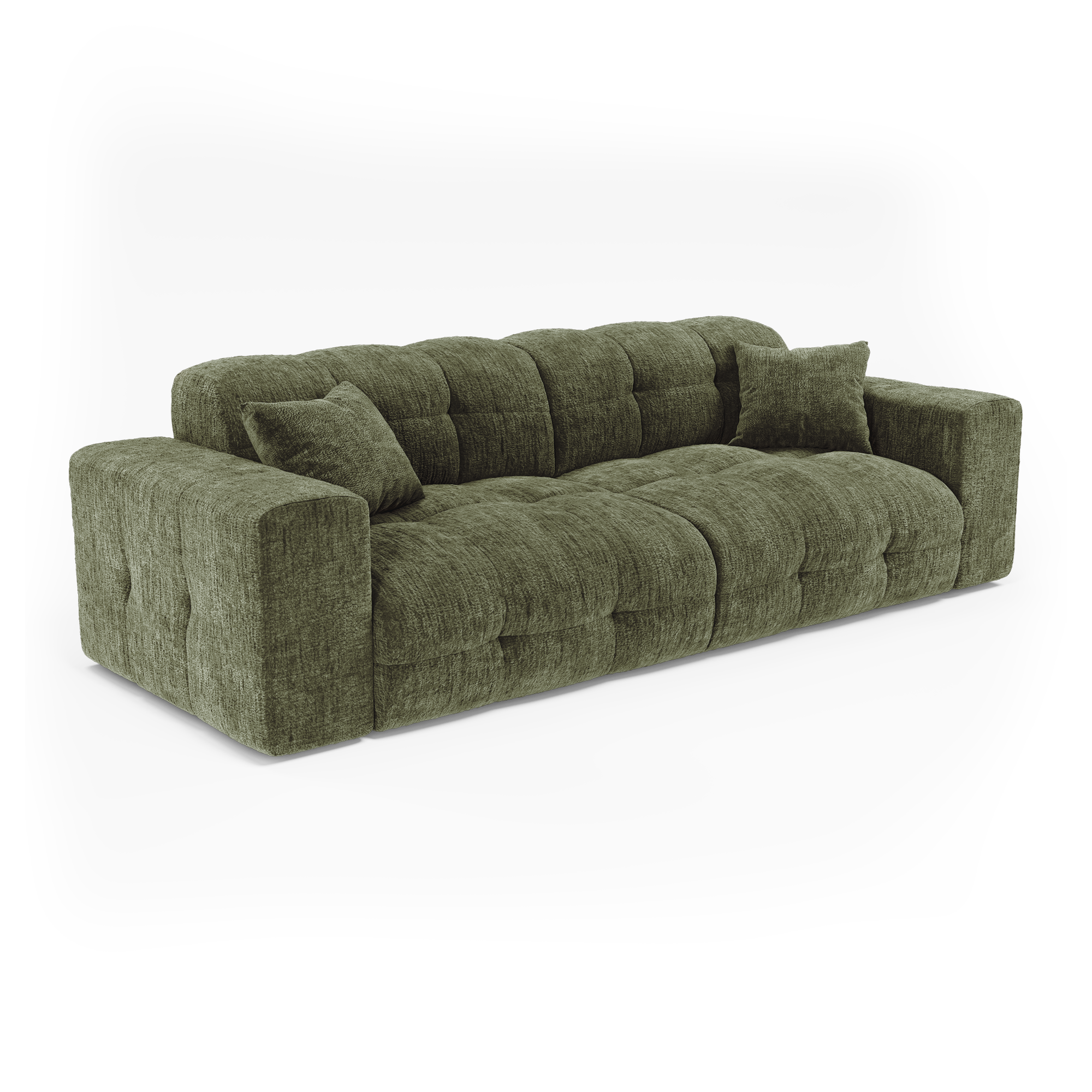

A perfect balance between clean lines and generous proportions, the symmetrical corner sofa has become one of the iconic pieces of contemporary living. With its mirrored shape, it embodies a true aesthetic, where each seat complements the other with equal precision.
Designed to elegantly structure space, it integrates seamlessly into a variety of layouts, from open-plan living areas to more intimate interiors – provided the room allows. However, it's essential to understand the contexts in which this model truly shines and how to subtly showcase its potential.
A shape designed for visual balance
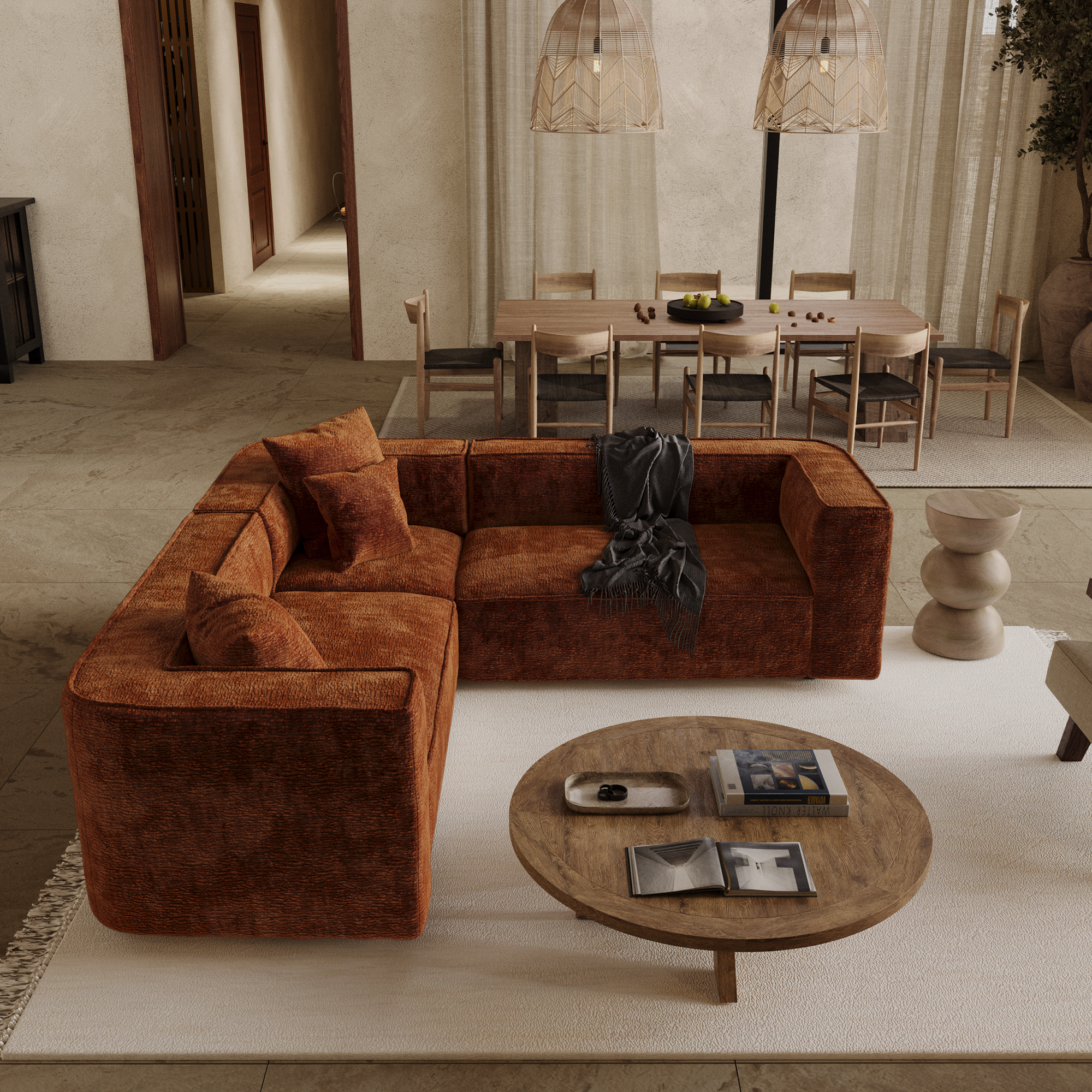
The symmetrical corner sofa is distinguished by its perfectly balanced silhouette . The centered corner, flanked by two sides of equal length, creates an immediate impression of stability. This arrangement places the sofa within a framework of visual order, where each element naturally finds its place.
Far from being merely functional, this rigorous geometry becomes a powerful aesthetic element in its own right. It captures the eye, anchors the living room in a clear structure, and lends the whole a quiet, almost architectural coherence. In an open or dynamic space, the symmetrical corner sofa acts as a stable base around which everything else is arranged.
Distinctive yet not imposing, its visual presence is particularly appreciated in interiors that value the clarity of volumes . Symmetry here is not a decorative effect: it is an art of interior composition.
A natural choice for generous volumes
Designed to thrive, the symmetrical corner sofa is perfectly suited to open or well-proportioned interiors . In a square living room or a room with windows on both sides , it stands out with natural ease, quickly becoming the focal point of the space.
Its format allows it to occupy space without partitioning it. It subtly defines a seating area while preserving the flow of movement around it. In a loft or contemporary architecture , where visual cues are often diluted in vast spaces, it structures the gaze and encourages a more intimate appreciation of the space.
Its symmetrical shape also allows for the creation of complementary functional zones. This interplay of transitions helps to establish a welcoming and fluid atmosphere, in which each function finds its place seamlessly.
Configurations tailored to every style
Although its geometry is rigorously defined, the symmetrical corner sofa lends itself to a wide variety of decorative styles. Its formal neutrality allows it to blend into highly contrasting environments.
In a minimalist interior , it enhances visual clarity. Placed in the center of a bright room, dressed in natural fabrics and soft hues, it contributes to a simple and controlled aesthetic.
In a more classic setting , it resonates with the codes of structured elegance, creating a coherent visual continuity. The sofa's symmetry complements herringbone parquet flooring, a trumeau mirror, or a fireplace framed by bookcases.
In a more organic or warm setting , it creates a subtle contrast with raw textures, natural irregularities, or handcrafted objects. The rigor of its lines then becomes a point of equilibrium in a teeming universe.
Finally, its combination with the living room elements – rug, lighting, coffee table – allows for a play on visual axes. Placed with precision, these accessories complement the design of the sofa and reinforce its graphic presence without ever weighing down the overall look.
Integrate it well into your decor: materials, colors, accessories
While a symmetrical corner sofa makes a natural statement in a space, its full potential depends on careful consideration of its surroundings. The choice of materials, colors, and accompanying elements plays a crucial role in its harmonious integration.
The colors should harmonize with the rest of the room. In a soft, mineral atmosphere, sandy beiges, stone grays, or clay tones enhance the feeling of calm. Conversely, a deep green or brown can visually anchor the sofa in a more enveloping setting while giving it a subtle distinctiveness.
Textures add a tactile dimension to the rigorous form. Velvet accentuates the depth, while a looped fabric softens the overall look with its organic relief. Carefully chosen, these materials help to situate the sofa within a coherent sensory narrative.
Accessories contribute to the overall balance. A generously sized central rug anchors the sofa in the space while defining a comfortable zone. A coffee table with a sculptural design, in glass or solid wood, creates a counterpoint of texture and height. Cushions allow you to play with volume, contrasts, or tonal harmonies without disrupting the continuity of the lines.
The sofa's placement in the room also deserves consideration. Positioned centrally, it helps to organize the perspective. Facing a window, it enhances the natural light. It's best to avoid placing it too close to walls or in cluttered corners to maintain a balanced sense of space.
When symmetry can constrain space
As appealing as it may be, the symmetry of this corner sofa can become a constraint in certain contexts. Its balanced structure imposes a certain volume, which must be carefully anticipated.
In a small or irregularly shaped living room, this type of sofa can quickly overwhelm the space and even impede the flow of movement . Its curved shape requires sufficient clearance on several sides to maintain a sense of lightness and avoid a cluttered appearance.
Another point to consider: absolute symmetry can create a feeling of rigidity or redundancy in an already well-structured environment. In this case, it's best to soften it by introducing off-center visual elements—a floor lamp slightly recessed, an asymmetrical wall composition—to add nuance to the overall look.
Installing a symmetrical corner sofa requires careful planning . It's not simply about "filling" a corner, but about creating a fluid flow around the room while highlighting natural focal points - bay window, fireplace, painting.
The essence of the symmetrical sofa
Conceived as both a focal point and a convivial space, the symmetrical corner sofa embodies a rare form of harmony. Its balanced geometry, its ability to structure spaces, and its stylistic adaptability make it a demanding yet profoundly rewarding choice.
In a well-designed interior, it becomes much more than just a seat: a center of gravity, a guiding line, sometimes even a discreet manifesto of functional elegance.