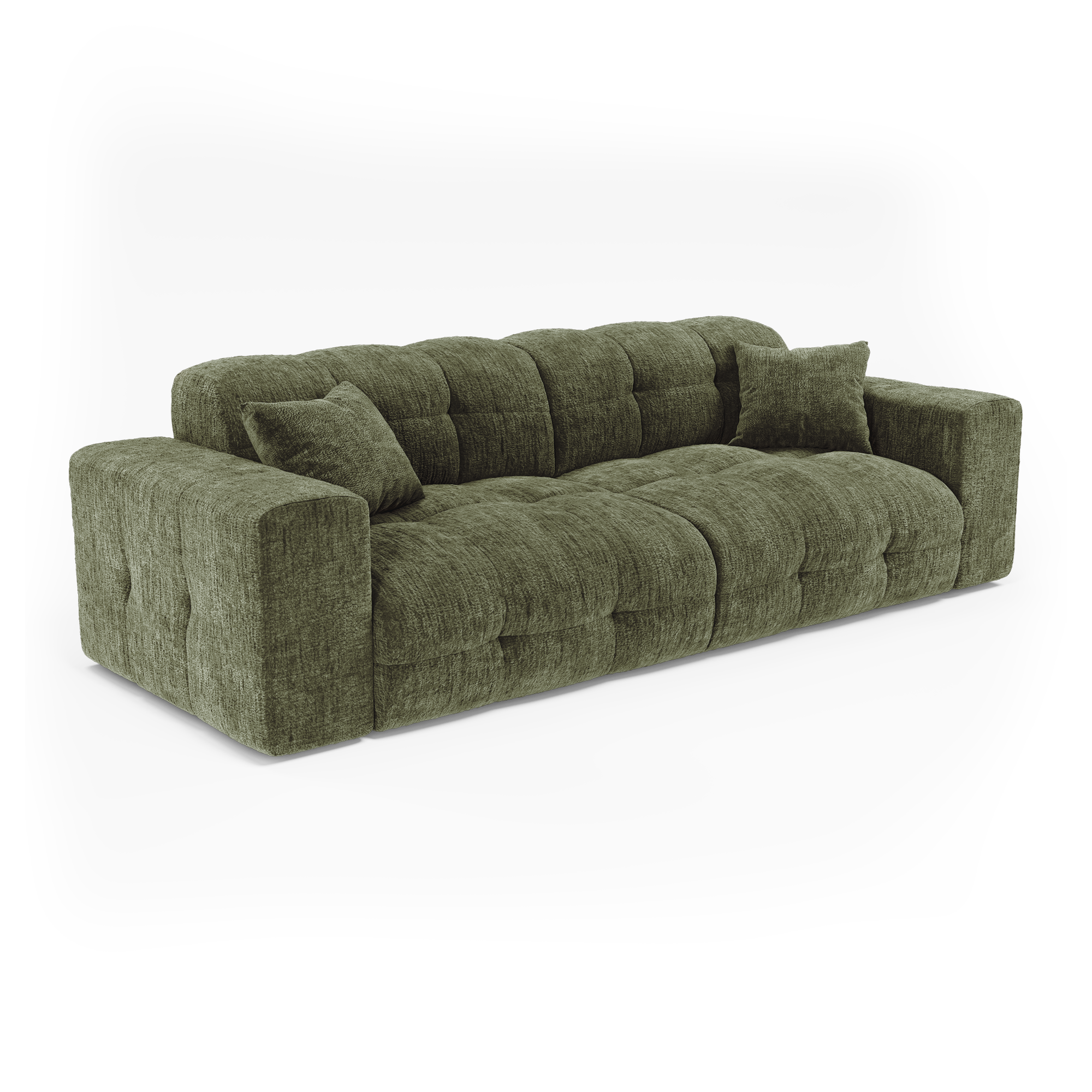

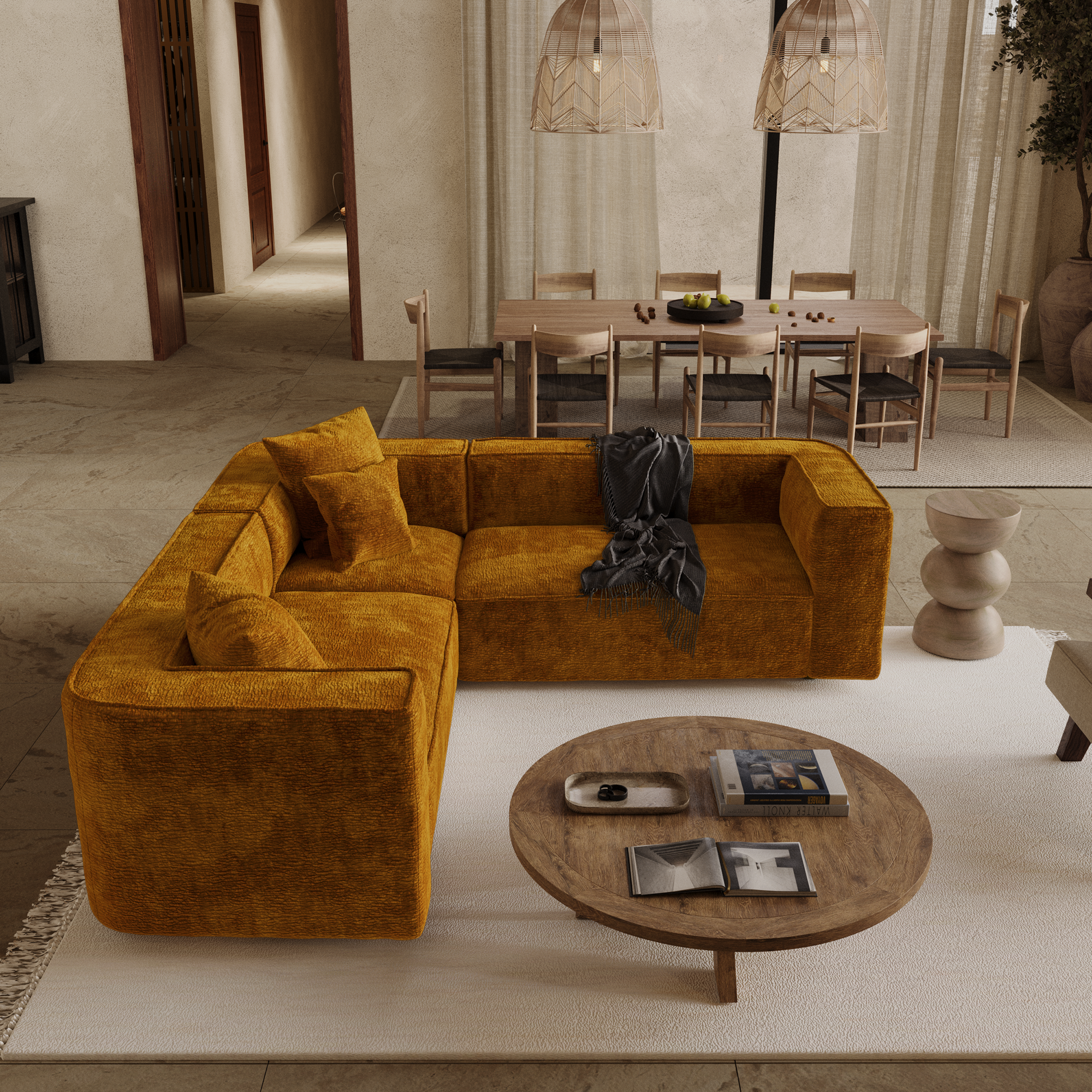
In a high-end interior, every detail contributes to the overall harmony. Among these, the choice of colors plays a strategic role: it structures the space, creates points of visual tension, or, conversely, establishes a serene atmosphere. As the centerpiece of the living room, the sofa becomes the starting point for this subtle interplay of colors, transforming the space into a place of character.
The key role of colors in balancing the living room
Color acts as an invisible yet essential component of interior design. It structures the perception of a space, defines its atmosphere, and shapes its character. Light colors visually enlarge a room, creating a sense of openness and lightness. Deeper tones create a more enveloping and structured, sometimes more intimate, ambiance.
The choice of colors around the sofa also contributes to this subtle balance. The hues of the walls, floors, rugs, and accessories should complement the sofa's color without ever overpowering it. A tone-on-tone harmony creates a soft and seamless ambiance; a well-considered contrast offers an interesting interplay of visual depth. The overall effect should remain coherent, fluid, and easy to navigate.
The chosen color palette directly influences the overall atmosphere of the room. Some tones induce relaxation, such as natural or soft shades; others instill rhythm, dynamism, or even a form of sophistication.
Colour is never simply “pretty”: it creates a true visual experience .
Enhance the sofa with well-coordinated color choices.
To truly showcase a sofa , it should be considered the starting point of a composition. A well-chosen color allows the room to be structured around a strong visual focal point, without imposing a rigid decorative feel. If the sofa is a bold color, the surrounding elements can opt for understated elegance with light, natural, or mineral tones. Conversely, a neutral sofa provides an ideal canvas for introducing bolder shades in small touches.
Next come the accessories — cushions , curtains, throws, decorative objects—invaluable tools for balancing the overall look . They can echo the sofa's color, extend it, or create a contrast, depending on the desired effect. Their role is also to create rhythm, particularly through the use of varied materials: bouclé, velvet, and so on. Combined with a restrained color palette, they add depth without overwhelming the space.
Pitfalls to avoid in order to preserve visual harmony
A successful composition often relies on what one chooses not to do.
For example, light is a crucial and often overlooked factor. The chosen color can change completely depending on the room's exposure to light—natural or artificial. What might appear warm in daylight can become dull or overly yellow in the evening. Anticipating these variations ensures a consistent color palette throughout the entire lighting cycle.
Another common mistake is using too many colors without a clear direction . A palette that's too scattered, without a clear hierarchy, breaks the visual unity and makes it difficult to read the space. It's better to stick to two or three dominant colors, perhaps complemented by a subtly used accent color. The 60-30-10 rule provides a simple and effective framework: 60% of a main color, 30% of a secondary color, and 10% of an accent color.
Some inspiration for a balanced and elegant living room
Certain color combinations naturally embody elegance.
In a living room, a grey sofa harmonizes with cushions in powder pink and sage green, creating a calm and contemporary atmosphere . For a bolder effect, a midnight blue model , accompanied by details in charcoal black and brushed brass, establishes a graphic and modern aesthetic.
Warm hues, particularly terracotta , blend subtly with beige rugs and mustard cushions , creating a sunny and inviting atmosphere . Conversely, an ecru sofa placed within a minimalist setting creates a chic, understated look inspired by Japanese design.
For a Mediterranean ambiance , a beige sofa punctuated with deep blue decor and terracotta evokes the light of the south while maintaining a certain aesthetic restraint.
When color becomes balance
The sofa, the central element of the living room, single-handedly structures the perception of space. Around it, each color finds its place, subtly blending and balancing. A carefully considered color palette not only enhances the sofa but also opens up, calms, or energizes the room. Between dominant hues and subtle accents, between texture and light, the whole creates a silent dialogue, resulting in a coherent and refined atmosphere.