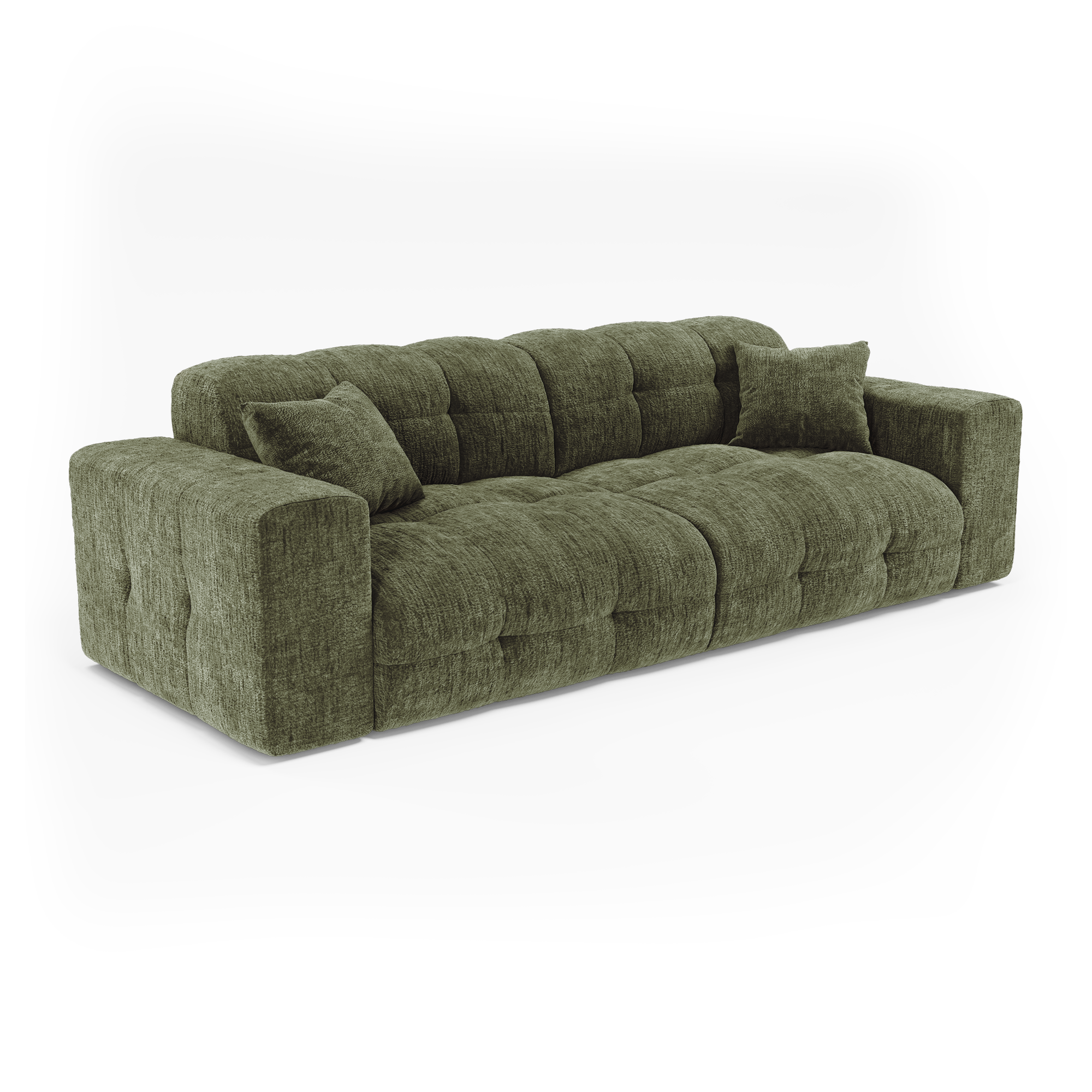

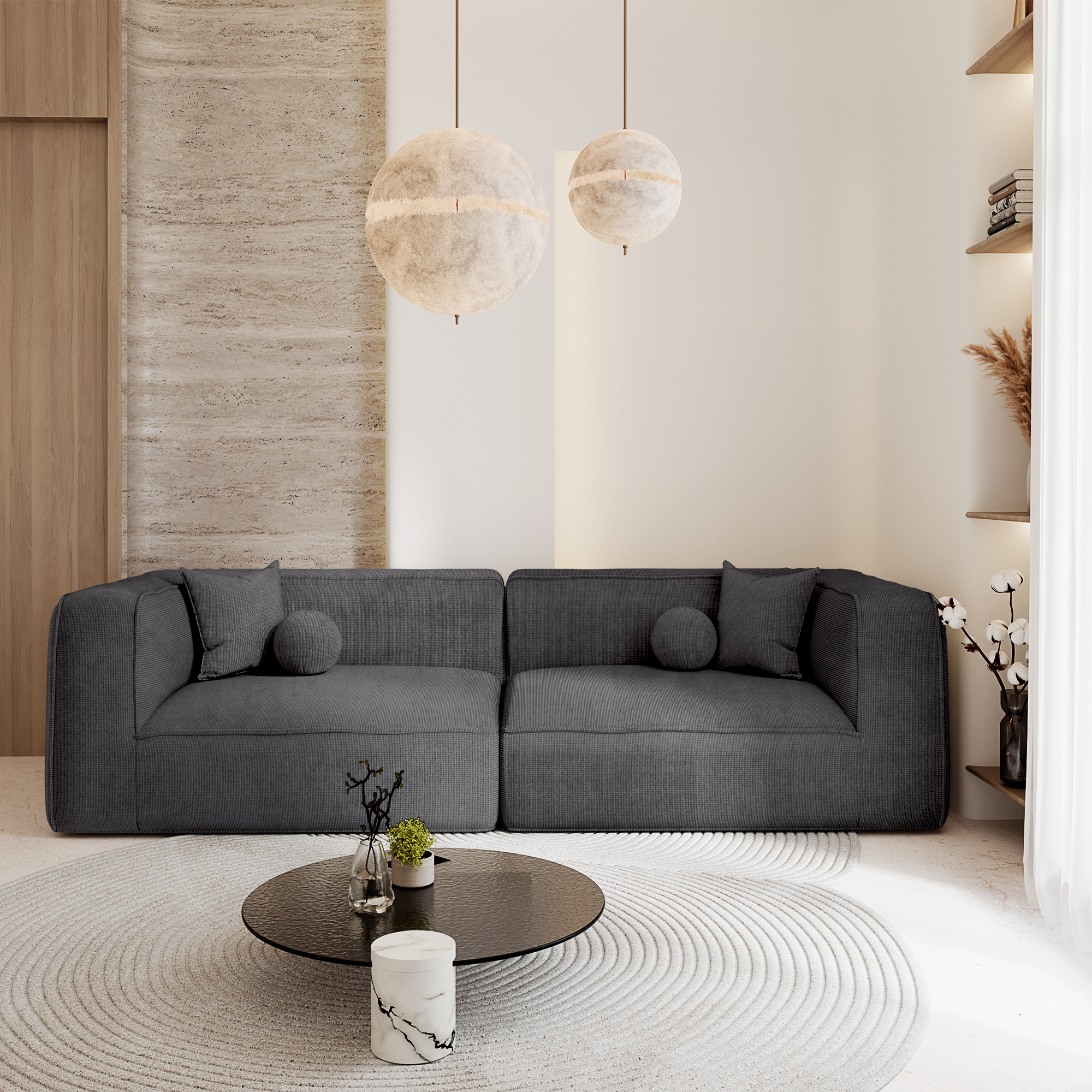
Sustainability, an essential criterion
Choosing a sofa isn't just about style or comfort. Behind the apparent softness of a fabric lies a practical reality: its ability to withstand the test of time and daily use. Repeated rubbing, constant movement, the presence of pets or children… all these factors put the material to the test. To assess this resistance, one indicator stands out as the international standard: the Martindale test .
Understanding the Martindale test
The Martindale test measures a textile's resistance to abrasion . Specifically, a fabric sample is subjected to repeated circular rubbing under standardized pressure until visible signs of wear appear . The number of cycles required to reach this point becomes the fabric's durability index. The higher the number, the more the fabric can withstand frequent use without premature deterioration.
This indicator, expressed in Martindale cycles, provides a universal language between manufacturers, sellers, and customers. It allows for the objective comparison of materials with very different appearances – linen, bouclé, velvet, woven fabric, etc.
Resistance ratings for a sofa
While the Martindale can sometimes amount to tens of thousands of cycles, certain thresholds are particularly useful for guiding a choice:
- Less than 10,000 turns : suitable for purely decorative fabrics, occasional cushions or very occasional seating;
- 10,000 to 15,000 revolutions : suitable for light domestic use, such as an armchair that is rarely used or a guest room;
- 15,000 to 25,000 revolutions : standard for a classic family sofa, used daily but in a normal usage context;
- 25,000 to 40,000 revolutions : designed for intensive use, central living areas, families with children or cohabitation with pets;
- Beyond 40,000 towers : reserved for professional environments or extreme demands - hotel lobbies, shared offices, public spaces.
These thresholds should not be read as a simple performance scale, but as benchmarks to adjust the choice of coating to its actual use.
Other criteria that shape quality
While the Martindale test sheds light on a fabric's mechanical resistance, it is not sufficient on its own. The durability of a sofa also depends on other essential factors.
Stain resistance is a key factor: some fabrics benefit from water-repellent or stain-resistant treatments that make them easier to care for without compromising their appearance. Lightfastness ensures that colors retain their vibrancy despite exposure to sunlight or bright indoor lighting.
Sensory comfort is paramount: a fabric may be durable but lack suppleness or warmth, which will affect the daily experience. Finally, ease of cleaning largely determines the longevity of the furniture, preventing stains or dirt from becoming permanently embedded.
To make the right choice
The real challenge lies in matching the fabric to the lifestyle it will be used in. For an occasional sofa in an office or spare bedroom, a medium Martindale rating may be perfectly adequate. Conversely, a main sofa in a family living room should prioritize a high rating, capable of withstanding repeated wear and tear.
The presence of children or pets makes this criterion even more important, and it's advisable to choose fabrics specifically designed to withstand scratches, play, and everyday mishaps. In all cases, the composition, feel, color nuances, and harmony with the interior should remain key considerations, as a sofa is as much a living space as it is a decorative piece.
An essential, but not exclusive, reference point
The Martindale scale offers an objective and reliable guide for predicting fabric wear. It is a valuable reference in the world of furniture, but must be considered alongside other equally fundamental criteria: comfort, aesthetics, maintenance, and suitability for lifestyle.
A sofa is chosen at the crossroads of these requirements, to combine beauty and resistance, immediate pleasure and durability over time.