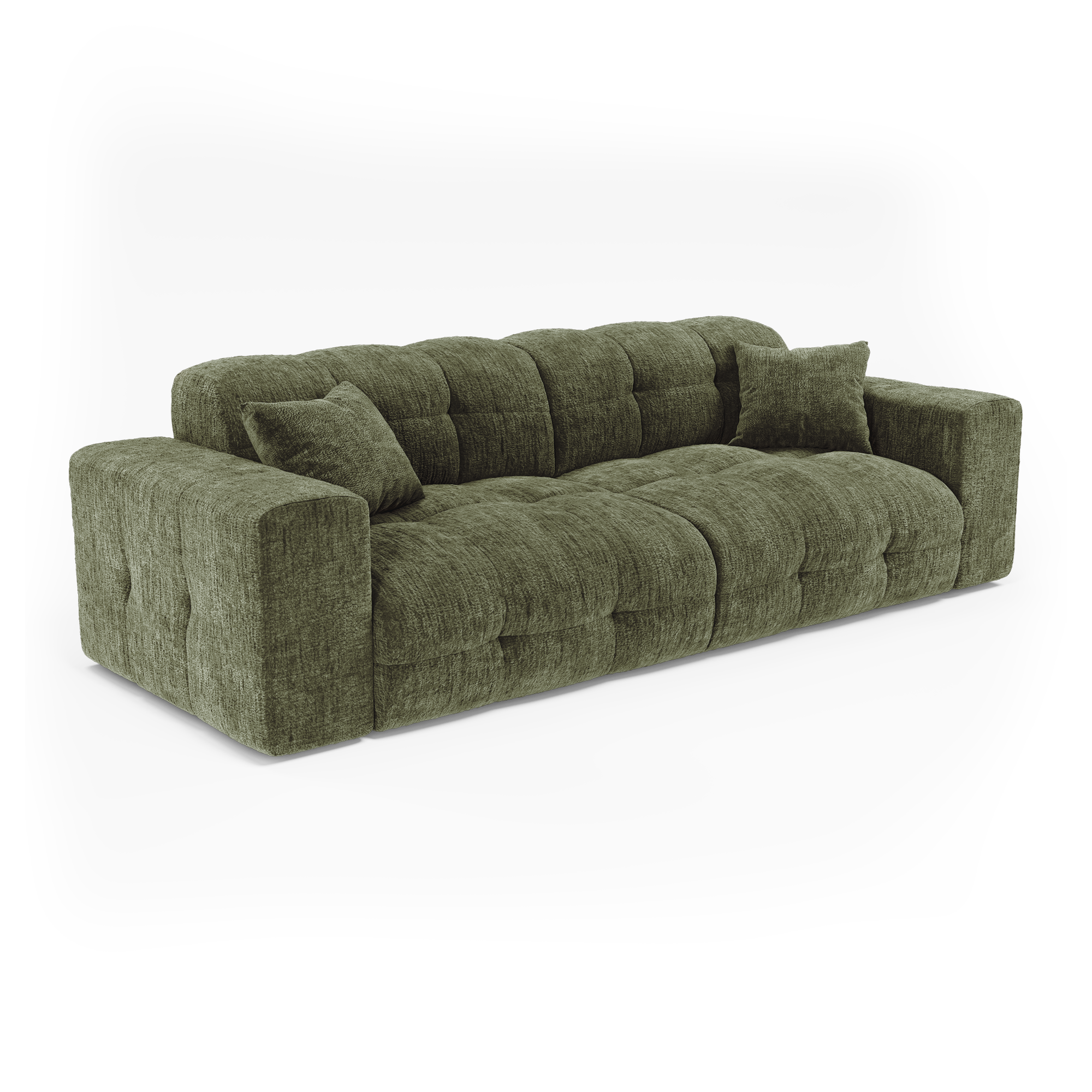

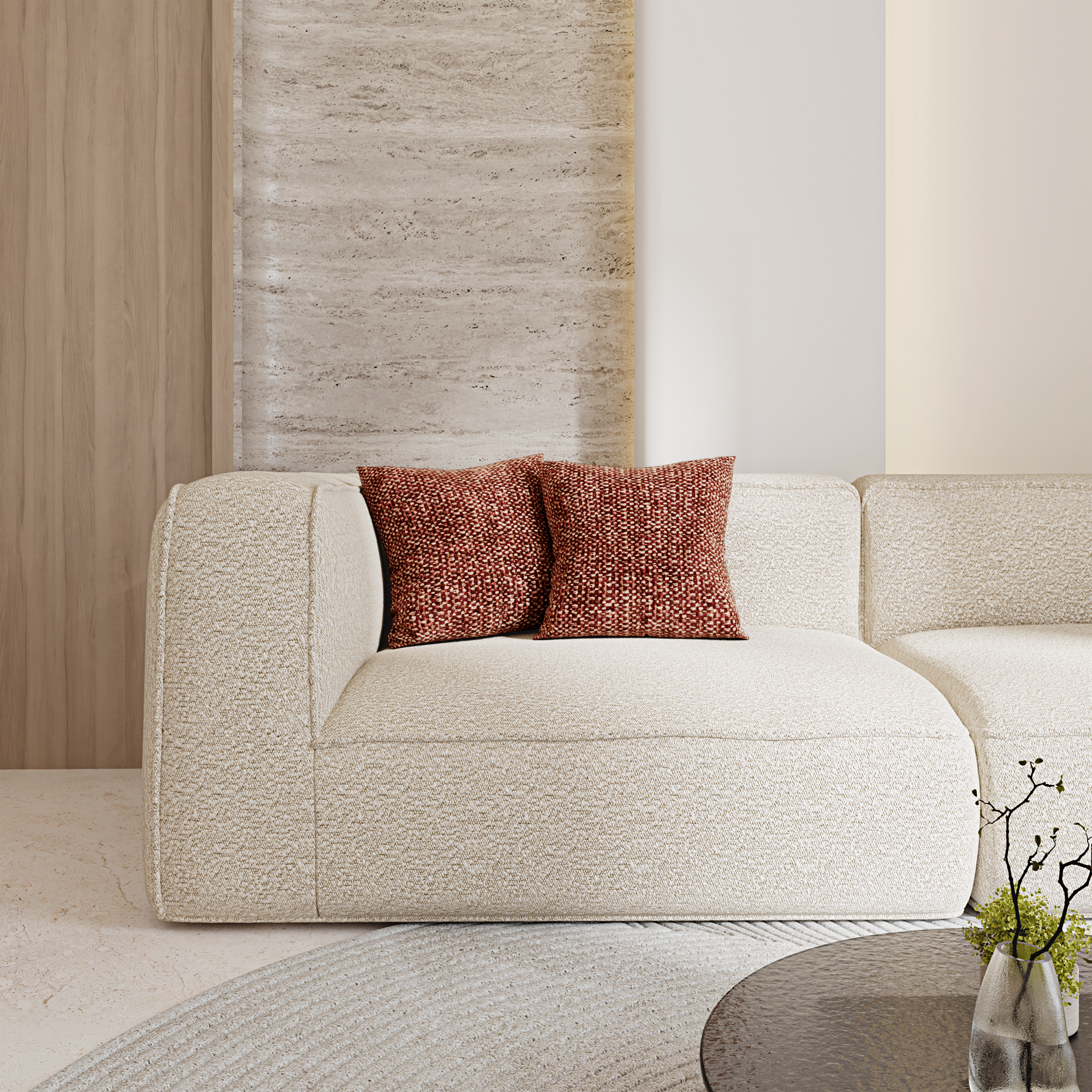
On average, a sofa lasts between 7 and 15 years. However, this estimate varies considerably depending on manufacturing quality and materials used. An entry-level fabric model may show signs of wear after just 5 years, while a high-quality full-grain leather sofa can easily last over 20 years with proper maintenance.
The lifespan of your sofa is not a matter of chance. It is the direct result of three elements: the chosen upholstery, the quality of the internal structure, and the intensity of daily use. Understanding these factors will not only help you make the right choice for your next purchase but also recognize when replacement becomes necessary.
Average Lifespan by Upholstery: A Comparison

Leather Sofa: The Champion of Longevity
Leather represents the most durable investment for your living room. A quality full-grain leather sofa can last two decades without losing its elegance, even developing a noble patina that enhances its character with age.
This natural material breathes, resists repeated friction, and is easy to clean. Contrary to popular belief, leather withstands intensive use in households with children well, provided a nourishing product is applied twice a year. Its natural robustness makes it the preferred choice for families looking for a long-term investment.
Fabric and Velvet Sofas: Versatile but More Fragile
Fabric sofas offer an infinite palette of textures and colors, which explains their popularity. Their lifespan generally ranges between 7 and 15 years, a wide range that primarily depends on the weaving density.
To assess the resistance of a fabric, refer to the Martindale test which measures abrasion resistance. A fabric with an index above 30,000 cycles is suitable for intensive daily use. Below 20,000 cycles, expect pilling and shiny areas to appear after only a few years.
Velvet, despite its luxurious feel, remains more delicate. It marks easily and requires regular brushing to maintain its original appearance. Prolonged exposure to UV rays can also cause noticeable discoloration, hence the importance of positioning your velvet sofa away from direct light.
Faux Leather and Synthetics
Synthetic coverings are an economical alternative to real leather, with an average lifespan of 5 to 8 years. Their main drawback is their tendency to crack over time, particularly at repeated contact points such as the seat and armrests.
If you opt for a faux leather sofa, choose mid-range models that incorporate a higher proportion of polyurethane. This composition delays the appearance of cracks and improves the material's breathability.
The 3 Technical Factors Determining Longevity
Beyond the visible upholstery, what lies inside your sofa truly determines its durability. Three structural elements make all the difference between furniture that sags after three years and one that retains its comfort for fifteen years.
Foam Density: The Decisive Criterion for Seating
The seat foam is the heart of your daily comfort. Its density, measured in kg/m³, directly predicts resistance to sagging. Below 30 kg/m³, you will observe a pronounced hollow effect after only two to three years of regular use.
For lasting comfort, look for a minimum density of 35 kg/m³. High resilience (HR) or Bultex foams offer even superior performance, maintaining their original shape even after years of intensive use. In corner sofas or very popular XXL models, a density of 40 kg/m³ becomes essential to prevent premature deformation.
The Frame: The Structure That Supports Everything
The invisible frame of your sofa determines its long-term stability. Manufacturers primarily use two types of structures with very different performances.
Solid wood frames, particularly beech or pine, guarantee remarkable solidity. These species resist repeated mechanical stresses without deforming, ensuring your sofa remains stable after years of use. Conversely, particle board or chipboard panels, while less expensive, gradually weaken under weight and repeated movements.
A quality frame also incorporates reinforcements at junction points and uses mortise and tenon joints rather than simple screws. This attention to constructive details results in increased longevity of several years.
5 Signs That It's Time to Change Your Sofa
Recognizing the signs of irreversible wear prevents you from keeping furniture that harms your comfort and posture. Here are the unmistakable indicators.
The Seat Remains Indented After Getting Up
When the imprint of your body persists for several minutes after you get up, the foam has lost its resilience. This phenomenon, called the "hollow effect," signals an irreversible compression of the seat foam. No cushion flipping will correct this structural defect.
You Feel the Frame Beneath You
If the wood of the frame or the springs become perceptible through the padding when you sit down, it means the protective layers have thinned considerably. This situation quickly becomes uncomfortable and can even cause bruising during prolonged use.
Suspicious Noises with Every Movement
Systematic creaking reveals fatigue in the frame or springs. These sounds usually come from loose fasteners or deformed springs rubbing against the frame. Beyond the auditory nuisance, these noises often herald imminent structural failure.
Torn Fabric or Cracked Leather
Significant tears in the fabric or extensive cracks on the leather rarely go beyond simple aesthetic repair. The cost of complete reupholstery often approaches that of a new entry-level sofa, making replacement more economically rational.
Unexplained Back Pain After a TV Evening
A worn-out sofa no longer properly supports your spine. If you regularly experience back or lumbar tension after spending time on your sofa, while it disappears in other situations, your seating no longer fulfills its ergonomic support function.
How to Extend the Life of Your Sofa? (Practical Tips)
A few simple actions can significantly postpone the need for replacement. These maintenance habits take only a few minutes but add several years to the life of your furniture.
Regular Cushion Rotation
Flip and rotate your seat cushions every two months. This rotation evenly distributes mechanical wear and prevents the appearance of localized sagging areas. Back cushions also benefit from this practice, although they are used less frequently.
Distance from Heat Sources and Direct Light
Position your sofa at least one meter from radiators and away from direct sunlight. UV rays gradually discolor fabrics and dry out leather, accelerating its aging. Excessive heat also weakens glues and joints, particularly in entry-level models.
Annual Professional or Steam Cleaning
A deep cleaning once a year removes abrasive particles embedded in the fibers that accelerate wear due to friction. For leather, cleaning followed by the application of a nourishing product maintains its suppleness and prevents cracking.
Never Sit on the Armrests
The armrests are the structural weak point of most sofas. They are not designed to support the weight of a seated person. This habit quickly deforms the padding and can even damage the fixings to the main frame.
Is It Worth Repairing or Should You Buy a New One?
This question requires a case-by-case analysis. A simple cushion re-padding generally costs between 200 and 400 euros depending on the dimensions, a relevant solution if the frame remains sound and the upholstery in good condition. However, if several elements show advanced signs of wear, investing in a new sofa of average quality often proves more judicious in the long run.
Consider repairing if your sofa is less than 7 years old, if only the cushions need intervention, and if the frame remains perfectly stable. In all other cases, especially for aging entry-level models, replacement generally offers better value for money.
The lifespan of your sofa therefore depends as much on your initial choice as on the attention you give it daily. By prioritizing robust materials, a quality frame, and adopting the right maintenance habits, you transform this investment into a durable companion for your daily life. Now that you know the essential criteria, you are equipped to make an informed choice that will accompany your home for many years.